
Astronomy and Space Science | Updated November 7, 2026
Introduction: How Many Solar Systems Are in the Milky Way?
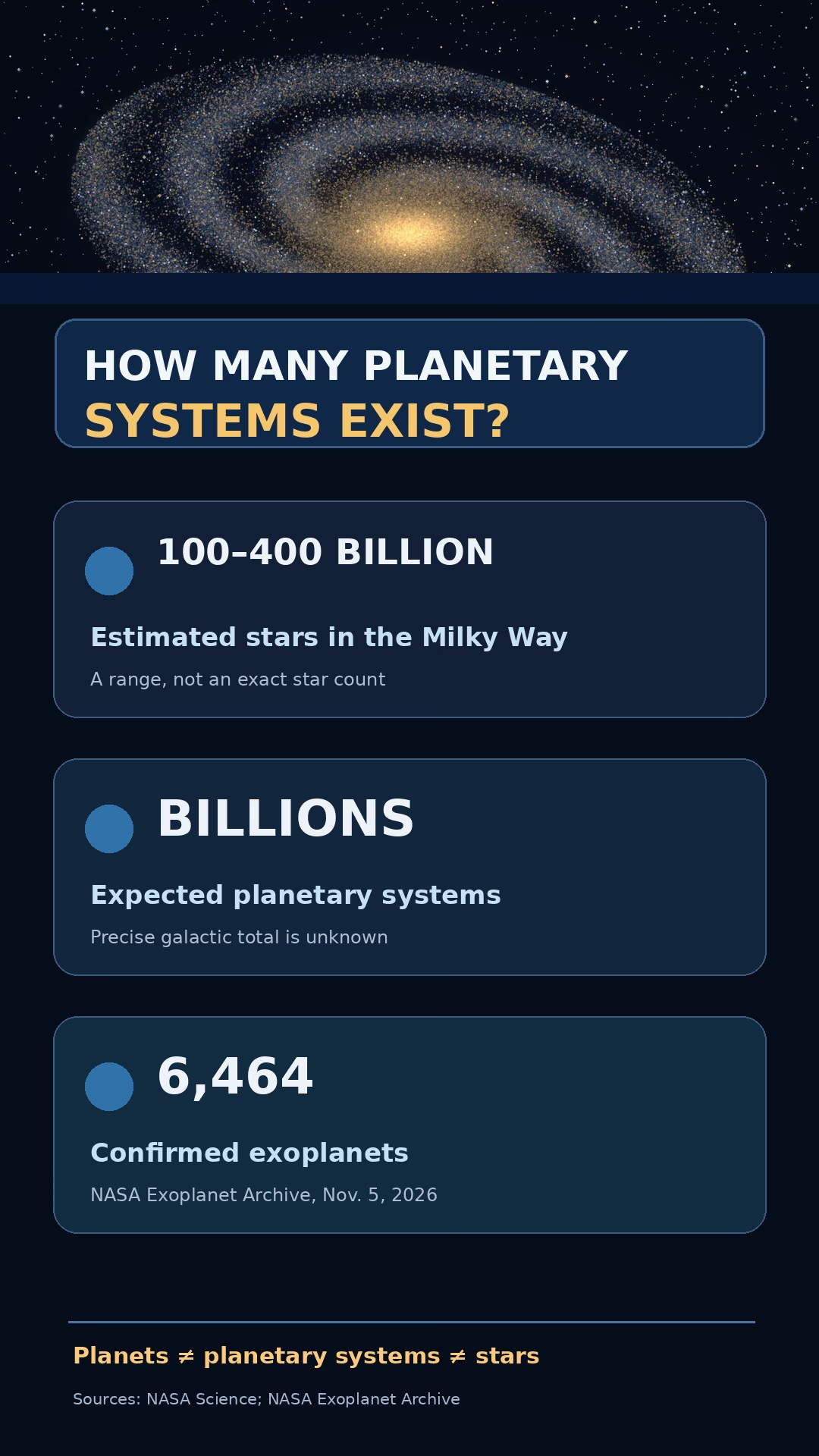
The Milky Way Galaxy likely contains billions of planetary systems, but astronomers do not yet know their exact number. Our galaxy is estimated to contain approximately 100 billion to 400 billion stars, and scientific observations indicate that planets are extremely common around stars. Some stars have one planet, others host multiple planets, and some may have no planets at all.
Research using gravitational microlensing, including a landmark study published in Nature in 2012, concluded that stars are typically orbited by planets. The findings support an average of at least one gravitationally bound planet per star across the populations studied, suggesting that the Milky Way may contain hundreds of billions of planets. However, this does not establish an equal number of separate planetary systems. [1] [4]
The distinction between a solar system and a planetary system is important. Strictly speaking, the Solar System is the planetary system surrounding our star, the Sun. Planetary systems orbiting other stars are called extrasolar planetary systems, and their planets are known as exoplanets.
As of November 5, 2026, the NASA Exoplanet Archive reported 6,464 confirmed exoplanets. These discoveries represent only a tiny fraction of the planets expected to exist throughout the galaxy. [2]
To understand how many planetary systems might exist, we need to examine the Milky Way’s stellar population, the frequency of planets around different stars, and the astronomical techniques used to detect distant worlds.
The Milky Way in numbers
| Measurement | Estimated or recorded value |
|---|---|
| Stars in the Milky Way | 100–400 billion |
| Expected planetary systems | Billions, exact total unknown |
| Confirmed exoplanets as of November 5, 2026 | 6,464 |
| Approximate diameter of the main stellar disk | 100,000 light-years |
Sources: NASA’s Milky Way overview and NASA Exoplanet Archive. Planetary-system abundance is a broad scientific inference, not a direct census. [1] [2] [28]
How Many Planetary Systems Are Estimated to Exist in the Milky Way?
Estimating the number of planetary systems requires more than counting stars. Astronomers must determine how frequently stars possess planets, how many planets occur around each host, and how multiple-star systems should be classified.
Large surveys, particularly those associated with the Kepler Space Telescope and gravitational microlensing programs, have transformed this question from speculation into statistical research. The available evidence strongly supports an enormous population of planetary systems, although no single universally accepted figure establishes their precise galactic total.
What Is the Milky Way Galaxy, and How Many Stars Does It Contain?
The Milky Way Galaxy is a barred spiral galaxy containing the Sun, Earth, billions of other stars, interstellar gas, dust, stellar remnants, and dark matter. Its main stellar disk extends approximately 100,000 light-years across, although the galaxy’s extended halo reaches considerably farther.
NASA commonly estimates that the Milky Way contains between 100 billion and 400 billion stars. The uncertainty exists because astronomers cannot individually observe and count every star. Many stars are extremely faint, distant, or obscured by interstellar dust. Low-mass red dwarfs are particularly numerous but relatively difficult to detect at large distances. [1] [28]
Astronomers therefore combine observations with stellar population models, luminosity measurements, and estimates of the galaxy’s structure. ESA’s Gaia mission observed roughly two billion stars and other objects, an enormous sample that nevertheless represents only a small percentage of the Milky Way’s full stellar population. [5]
How Many Solar Systems Could Exist in Our Galaxy?
If the question refers to planetary systems around stars other than the Sun, the most scientifically defensible answer is billions, potentially extending into the hundreds of billions.
There is no verified calculation establishing that every one of the Milky Way’s estimated 100 billion to 400 billion stars possesses its own planetary system. Nevertheless, exoplanet surveys show that planets are widespread, including around stars significantly smaller and cooler than the Sun.
The difficulty in turning these observations into a definitive system count involves three distinctions:
- One planetary system may contain several planets.
- Binary or multiple-star systems may share a planetary system.
- A star without a detected planet is not necessarily a star without planets.
Consequently, the number of planetary systems cannot simply be assumed to equal either the number of stars or the number of planets. An accurate population estimate requires a measured fraction of stars or stellar systems that host planets, corrected for observational limitations. [3] [4]
How Many Exoplanets Are Believed to Exist in the Milky Way?
An exoplanet is a planet outside our Solar System. Most known exoplanets orbit stars, although astronomers also investigate free-floating planetary-mass objects.
Statistical studies suggest that the Milky Way contains at least hundreds of billions of planets in the broad sense that the average abundance of planets is comparable to or greater than the stellar population. NASA describes planets as being at least as numerous as stars in our galaxy. [1] [4]
One reason planetary numbers can exceed stellar numbers is planetary multiplicity. A star may host several planets formed within the same protoplanetary disk. Our Solar System, for example, contains eight recognized planets orbiting one star.
Thus, a galaxy containing 200 billion stars could contain substantially more than 200 billion planets without containing more than 200 billion distinct single-star planetary systems. The exact galactic totals depend on the underlying frequency and distribution of planets, including populations that remain difficult to detect.
Does Every Star Have Its Own Planetary System?
Astronomers have not demonstrated that every star in the Milky Way has planets. A planet-hosting star is one with at least one planet, but the absence of an observed planetary signal does not establish that the star is planet-free.
Researchers use planet occurrence rates to estimate how frequently planets appear around particular classes of stars. These rates may describe the fraction of stars hosting at least one planet or the average number of planets per star within specified orbital and mass ranges. The two statistics answer different questions.
A star hosting five planets contributes five planets but only one host system to the census. Conversely, planets can orbit either member of a binary independently or circle both stars in a circumbinary orbit.
The frequency of planets also depends on their size, orbital distance, and host-star characteristics. This is why astronomers analyze stellar populations and planetary populations separately rather than assuming that one star always means one planetary system. [4] [27]
What Is the Difference Between Known and Estimated Planetary Systems?
The difference between confirmed discoveries and statistically estimated populations is central to exoplanet astronomy. A confirmed planet has observational evidence that satisfies established scientific and cataloging standards, while an estimated planet may be inferred from the frequency of similar objects in an observed sample.
Astronomers use confirmed discoveries to investigate individual worlds and use corrected survey results to estimate populations that telescopes have not directly observed. Both approaches are scientifically valuable, but their numerical results should not be presented as interchangeable.
What Qualifies as a Confirmed Planetary System?
A confirmed extrasolar planetary system contains at least one confirmed planet associated with a host star or stellar system. Confirmation may involve repeated observations, independent measurements, statistical validation, and analysis demonstrating that alternative explanations are sufficiently unlikely.
The NASA Exoplanet Archive applies published inclusion criteria. These include an orbiting object rather than a free-floating planet, a mass or minimum mass no greater than 30 Jupiter masses, sufficient evidence against false-positive interpretations, and results accepted in peer-reviewed astronomical literature. This is an archive-specific inclusion policy, not a universal physical definition of a planet. [6]
A statistically inferred system differs because its existence as an individual object has not been established. For example, observations may imply that millions of stars in a region possess planets even when those particular planets have not been individually identified.
What Is an Exoplanet Candidate?
An exoplanet candidate is an object or observational signal that could indicate a planet but has not satisfied the requirements for confirmation. A candidate might be identified when a star repeatedly dims, suggesting that an object is passing in front of it.
However, similar brightness variations can arise from eclipsing binary stars, background stellar systems, instrumental effects, or changes in the star itself. Astronomers therefore conduct follow-up observations and examine alternative explanations before accepting a planet as confirmed.
Candidates are especially important in large surveys such as TESS and Kepler. They indicate promising targets and help characterize detection methods, but they must not automatically be added to confirmed-planet totals.
In November 2026, the NASA Exoplanet Archive listed thousands of TESS candidates still awaiting confirmation or rejection. [7]
How Do Astronomers Count Planetary Systems?
A planetary-system census counts distinct hosts or physically associated stellar systems rather than simply adding up confirmed planets. The NASA Exoplanet Archive provides a Planetary Systems table, a composite planet-parameter table, and a Stellar Hosts table.
Its data structure includes fields for the host name, the number of confirmed planets in a system, and the number of gravitationally associated stars. These attributes allow researchers to investigate unique host systems and distinguish single-star from multiple-star configurations. [3] [26]
In early November 2026, an independent catalog aggregation based on NASA Exoplanet Archive records reported approximately 4,857 known planetary systems containing 6,464 confirmed exoplanets. The system total is a derived catalog count, not a direct census of every planetary system in the Milky Way. [2] [29]
This count will change as additional discoveries are confirmed and catalog records are revised.
How Common Are Systems with Multiple Planets?
Multi-planet systems contain two or more planets orbiting the same host star or associated stellar configuration. Their existence demonstrates that planetary formation commonly produces more complex arrangements than a single planet surrounding one star.
Planetary multiplicity describes how many planets occupy a system. It is an important measure because it reveals how planets are distributed, how closely their orbits are spaced, and how gravitational interactions influence their long-term evolution.
Several well-studied examples contain many planets, including TRAPPIST-1 with seven confirmed planets and Kepler-90 with eight. These systems establish that multiple planetary orbits can remain dynamically organized over long periods. [12] [13]
However, a system with only one confirmed planet may contain additional undiscovered worlds. Therefore, the observed multiplicity distribution is not necessarily the true multiplicity distribution throughout the galaxy.
Do Stars Without Detected Planets Actually Have No Planets?
A star with no detected planets should not automatically be classified as planet-free. The detection of exoplanets depends on their properties, the host star, the observation duration, and the geometric relationship between the planetary orbit and the observer.
For example, a planetary system viewed from an unfavorable angle may produce no transits visible from Earth. Likewise, a small planet with a long orbital period may generate stellar motions too subtle to measure reliably.
A planet orbiting far from its star could require decades of monitoring before astronomers observe a complete orbit. Faint stars and stellar activity introduce further complications.
These limitations produce large populations of undetected planets. Statistical surveys attempt to account for them by measuring detection efficiency and estimating how many planets the instruments would have missed. [8]
How Quickly Is Our Knowledge of Planetary Systems Growing?
The confirmed exoplanet population has increased dramatically since the first widely accepted exoplanet discoveries around a pulsar in 1992 and the discovery of 51 Pegasi b around a Sun-like star in 1995.
NASA reached the milestone of 6,000 confirmed exoplanets in September 2025. By November 5, 2026, the NASA Exoplanet Archive listed 6,464 confirmed planets, reflecting continued discoveries and catalog updates. [2] [7]
Progress is not measured only by discovering additional planets. Astronomers increasingly determine planetary masses, radii, atmospheric compositions, orbital inclinations, and host-star properties.
The growth of confirmed discoveries also depends on published research, not simply on the date a telescope first detects a possible planet. A signal recorded years earlier can become a confirmed discovery after new analysis or follow-up observations.
Where Are Planetary Systems Located Within the Milky Way?
Planetary systems are not limited to the Sun’s neighborhood. Because the Milky Way contains enormous populations of stars across its disk, bulge, and halo, astronomers expect planets to occur in multiple galactic environments.
However, the known distribution of exoplanets is heavily influenced by where telescopes have observed and which stars are accessible to their instruments. A map of confirmed planets therefore reflects both the underlying galaxy and the observational history of exoplanet searches.
How Is the Milky Way Galaxy Structured?
The Milky Way has three major stellar structural components: the galactic disk, the central bulge, and the extended stellar halo. It also contains a central bar, interstellar gas and dust, and a much larger dark matter halo.
The galactic disk contains most of the galaxy’s prominent spiral structure, along with many young stars and star-forming regions. The galactic bulge is a dense concentration of stars surrounding the central regions.
The stellar halo extends far above and below the disk and contains old stars and globular star clusters. Its stellar population is much more diffuse than the disk’s.
Planetary systems may exist in these different regions, although their formation histories and chemical environments can differ. The detection of planets in distant galactic populations remains more challenging than detecting them near the Sun. [1] [19]
Which Part of the Milky Way Contains Our Solar System?
Our Solar System lies within the Milky Way’s disk, in a smaller spiral feature commonly called the Orion Arm or Orion Spur. This structure is situated between the larger Sagittarius and Perseus spiral arms.
The Sun is located roughly 26,000 light-years from the Galactic Center, with the precise value depending on the adopted astronomical measurements. Its position places it well outside the dense central bulge.
Spiral arms are important because they contain gas clouds, dust, and stellar populations associated with ongoing star formation. As new stars develop within these environments, planet-forming disks may emerge around them.
The Sun also orbits the center of the Milky Way, requiring roughly 230 million to 250 million years to complete one galactic revolution. Our Solar System is therefore moving through the galaxy rather than remaining fixed within a stationary spiral pattern. [19] [28]
What Is at the Center of the Milky Way?
The Galactic Center contains a dense and complex concentration of stars, hot gas, magnetic fields, and energetic astronomical processes. At its center is Sagittarius A*, a supermassive black hole with a mass of approximately four million times that of the Sun.
NASA reports that stellar densities in some central regions can be enormously greater than those near the Sun. Nearby stellar separations in the Galactic Center may be only a small fraction of a light-year. [19]
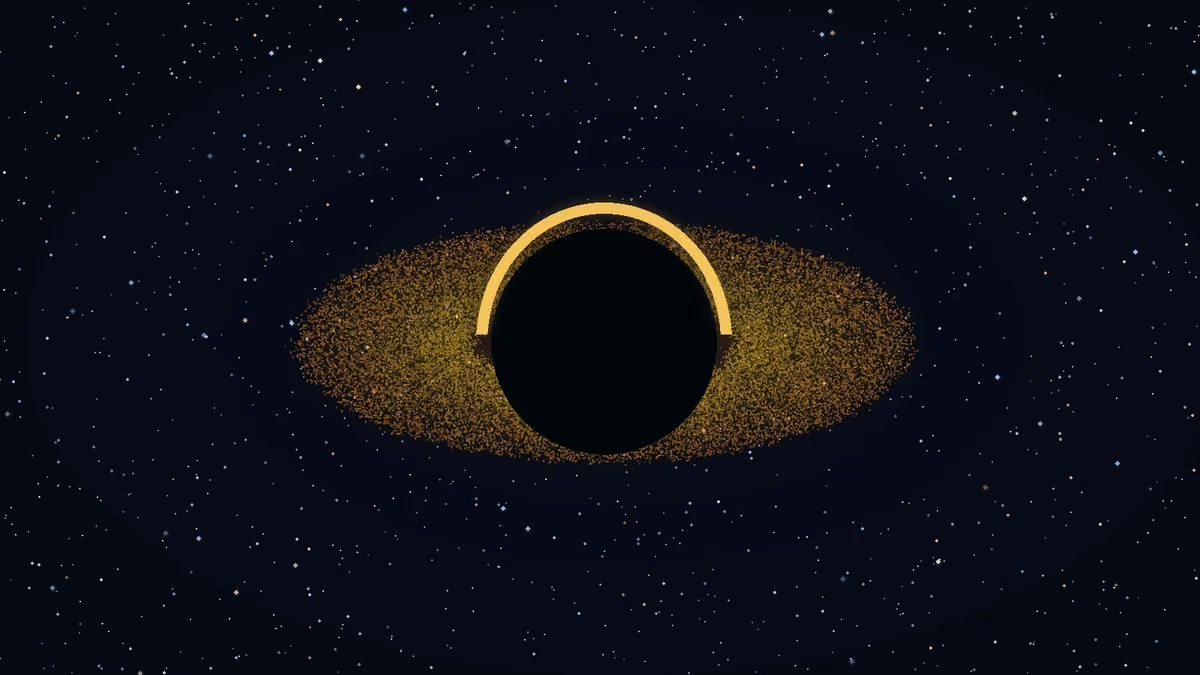
Such environments differ substantially from the Solar System’s relatively quiet galactic neighborhood. Close stellar encounters, intense radiation fields, and the distribution of interstellar gas may influence planetary formation and evolution.
Nevertheless, the presence of a supermassive black hole does not mean the entire central galaxy is incapable of hosting planets. Planetary environments must be evaluated according to their local stellar and orbital conditions.
How Large Is the Milky Way, and How Are Stars Distributed?
NASA describes the main Milky Way stellar disk as approximately 100,000 light-years across, although its outer stellar populations and halo extend farther. The galaxy is therefore much larger than the region represented by most known exoplanets.
Stellar density measures the number of stars occupying a particular volume of space, often expressed as stars per cubic parsec. It varies substantially across the galaxy.
The central regions contain extremely dense stellar populations, while the outer disk and halo generally have fewer stars per unit volume. Star formation also produces localized concentrations of young stars in associations and clusters.
If planetary occurrence rates were identical everywhere, regions containing more stars would generally contain more planet-hosting stars. However, metallicity, stellar age, and environmental differences can change the actual distribution of planets. [1] [19]
What Fills the Space Between Stars and Planetary Systems?
The region between stars contains the interstellar medium, a mixture of gas, dust, charged particles, magnetic fields, and cosmic rays. Although interstellar space is extraordinarily sparse by terrestrial standards, this material is fundamental to galactic evolution.
Much of the interstellar gas is hydrogen, accompanied by helium and smaller quantities of heavier elements. Dust grains contain materials including silicates and carbon-rich compounds.
Dense molecular clouds provide the environments in which new stars form. Under suitable conditions, gravity causes regions within these clouds to collapse, producing protostars surrounded by rotating disks.
These disks can eventually develop into planetary systems. Consequently, the interstellar medium supplies much of the raw material from which future planets, moons, asteroids, and comets may form. [9]
How Do Astronomers Measure Distances Between Planetary Systems?
Astronomers use different units because distances within a planetary system are much smaller than distances between stars.
The astronomical unit (AU) is defined as exactly 149,597,870,700 meters, approximately the average distance between Earth and the Sun. It is useful for describing planetary orbits.
A light-year is the distance light travels through a vacuum in one year, approximately 9.46 trillion kilometers. A parsec equals approximately 3.26 light-years and is especially useful for stellar distance measurements and population studies.
For perspective, Neptune orbits the Sun at roughly 30 AU, while the nearest star, Proxima Centauri, is approximately 4.25 light-years away. The enormous difference explains why studying planets around other stars requires sensitive instruments and indirect detection methods. [20]
| Unit | Approximate equivalent | Common application |
|---|---|---|
| Astronomical unit | 149.6 million km | Planetary orbital distances |
| Light-year | 9.46 trillion km | Distances between stars |
| Parsec | 3.26 light-years | Stellar astronomy and galactic structure |
| Kiloparsec | 1,000 parsecs | Galactic distances and distributions |
What Kinds of Stars and Stellar Systems Can Host Planets?
Planets form around many kinds of stars, not just stars resembling the Sun. Exoplanet discoveries include planetary hosts ranging from low-mass red dwarfs to more massive and luminous stars, as well as planets associated with multiple-star systems and stellar remnants.
The mass, age, composition, and evolutionary state of the host star influence planetary formation and the environments planets experience. Understanding these relationships is essential when estimating the total planetary population of a galaxy containing many different stellar types.
Can Planetary Systems Form Around More Than One Star?
Yes. A planetary system can exist within a binary or multiple-star system. A binary star system consists of two stars gravitationally bound to one another, while higher-order multiple-star systems contain three or more associated stars.
Astronomers use stellar multiplicity to describe the number of stars belonging to a gravitationally connected system. Planets may orbit one member of a binary or, in some configurations, move around both stars.
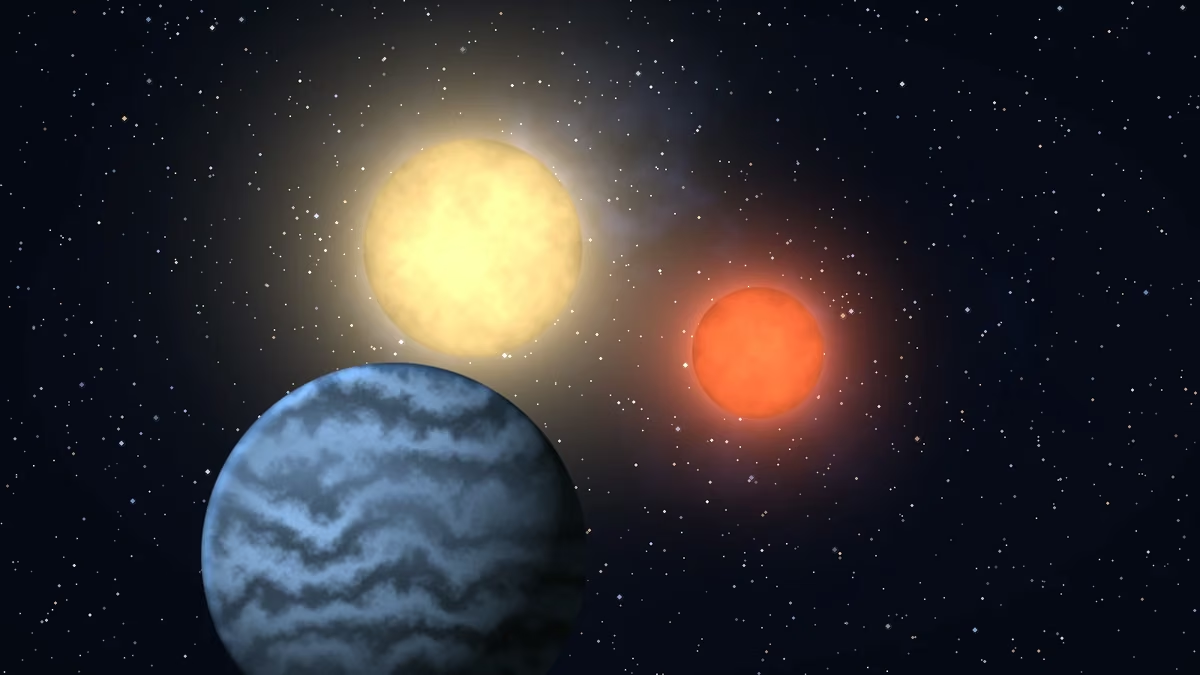
The possibility of stable planetary orbits depends on the stars’ separation, their masses, orbital eccentricities, and the location of the planetary orbit.
This matters for estimating galactic populations because the number of stars is not identical to the number of independent stellar systems. Two stars forming one binary do not automatically represent two distinct planetary systems. [27]
What Are Circumbinary and Single-Planet Systems?
A circumbinary planetary system contains at least one planet orbiting a pair of stars rather than a single star. Kepler-16 b is a well-known example discovered through observations from NASA’s Kepler mission.
The planet follows an orbit around both members of its host binary, demonstrating that planet formation and long-term orbital motion are possible in some double-star environments. [27]
By comparison, a single-planet system generally means a system in which only one planet has been confirmed. This classification should not be interpreted as proof that no additional planets exist.
Small planets, distant companions, and worlds with unfavorable orbital orientations can remain undetected. Astronomers therefore distinguish between the number of known planets and the number the system may actually contain.
Which Types of Stars Are Most Likely to Have Planets?
Planetary occurrence depends partly on host-star mass, which influences the amount of material available in a protoplanetary disk and the gravitational environment in which planets develop.
Red dwarfs, also known as M dwarfs, are smaller, cooler, and less massive than the Sun. They are the most numerous stellar category in the Milky Way, making them especially important in estimates of galactic planetary abundance.
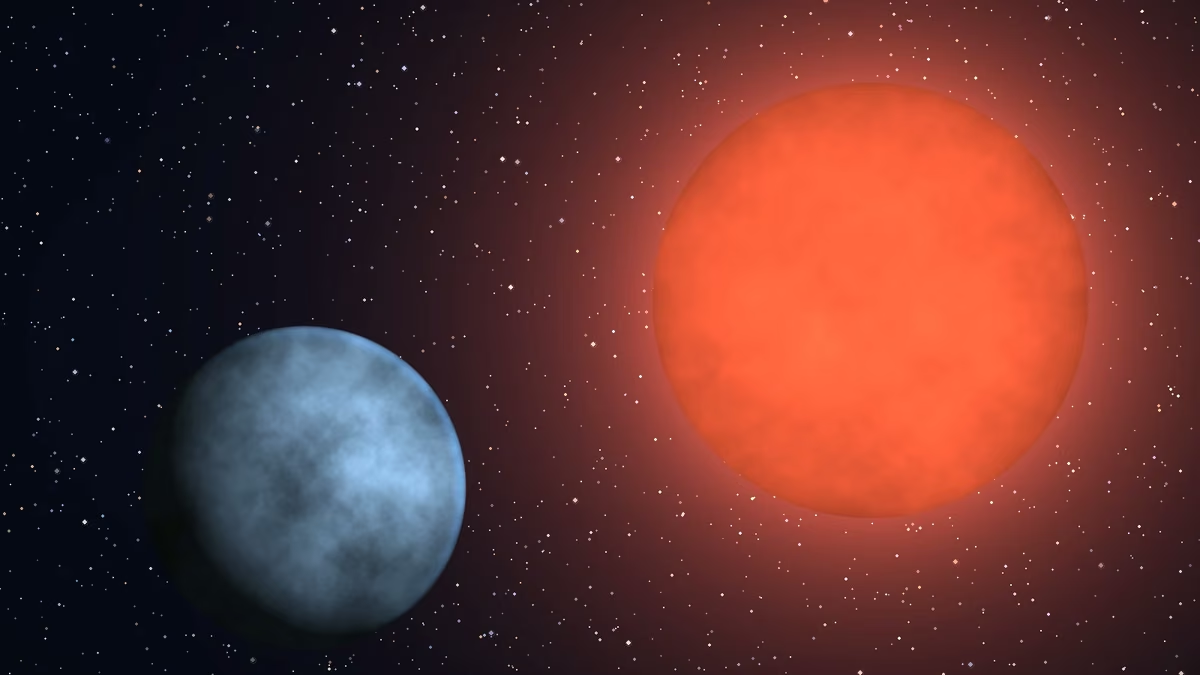
Sun-like stars, typically associated with G-type main-sequence stars, also host a wide range of planetary systems, including small rocky planets and gas giants.
Studies indicate that smaller planets are common around low-mass stars, while the occurrence of giant planets depends more strongly on stellar mass and chemical composition. However, observational biases complicate comparisons, and no single stellar category should automatically be regarded as the most planet-rich under every definition. [4] [18]
How Do Stellar Age and Chemical Composition Affect Planets?
The age and chemical composition of a star can provide clues about the formation and evolution of its planets.
In astronomy, stellar metallicity refers to the abundance of elements heavier than hydrogen and helium. These heavier elements include oxygen, carbon, silicon, and iron, which contribute to the solid materials needed for planetary formation.
Research shows that gas giants occur preferentially around stars with relatively high metallicity. Smaller planets, including rocky worlds, can form around stars with a much wider range of heavy-element abundances. [18]
Stellar age also matters. Young planetary systems may retain gas-rich disks and experience active migration or collisions, while older systems have undergone much longer periods of orbital evolution.
Over time, stellar radiation, winds, mass loss, and changes in luminosity can alter planetary atmospheres and surface environments.
What Makes Our Solar System a Planetary System?
Our Solar System consists of the Sun and the objects gravitationally associated with it. The Sun is the central star and contains the overwhelming majority of the Solar System’s mass.
Eight recognized planets orbit the Sun: Mercury, Venus, Earth, Mars, Jupiter, Saturn, Uranus, and Neptune. The system also includes dwarf planets such as Pluto and Ceres, natural satellites, asteroids, comets, and smaller objects. [17]
The Sun’s gravity governs the large-scale orbital structure, while gravitational interactions between planets and smaller bodies contribute to their orbital evolution.
Our Solar System is one example of a planetary system, but it should not be considered a universal template. Many extrasolar systems contain giant planets very close to their stars, tightly packed rocky planets, or orbital arrangements unlike those observed around the Sun.
How Do Planetary Systems Form and Remain Stable?
Planetary systems begin with the formation of stars and the evolution of surrounding material. The most widely used framework for explaining planet formation involves gas, dust, gravitational collapse, protoplanetary disks, and the gradual accumulation of solid and gaseous material.
However, forming planets is only part of the process. Once planets exist, their orbits can change through gravitational interactions, migration, collisions, and encounters with other objects. The planetary systems observed today represent the outcomes of these evolutionary processes.
How Are New Stars Formed in the Milky Way?
Stars form primarily within dense regions of cold molecular clouds. When a region becomes gravitationally unstable, gas and dust begin collapsing inward, increasing the density and temperature near the developing protostar.
Because collapsing material generally possesses angular momentum, some of it forms a rotating disk rather than falling directly onto the young star. This disk can eventually become the birthplace of planets.
Astronomers describe the production of new stars through a galaxy’s star formation rate, commonly measured as the mass converted into stars per year.
The Milky Way continues forming stars, although its rate of stellar production varies across different regions and over cosmic time. These newly formed stars can create opportunities for additional planetary systems, while older stars and their planets continue evolving.
How Do Planets Form Around Young Stars?
Planets are thought to form primarily within protoplanetary disks, rotating structures containing gas and dust around young stars.
Under the core-accretion framework, tiny solid particles collide and accumulate into larger grains, pebbles, and eventually planetesimals. These bodies can grow through additional collisions and gravitational attraction, producing larger objects called protoplanets.
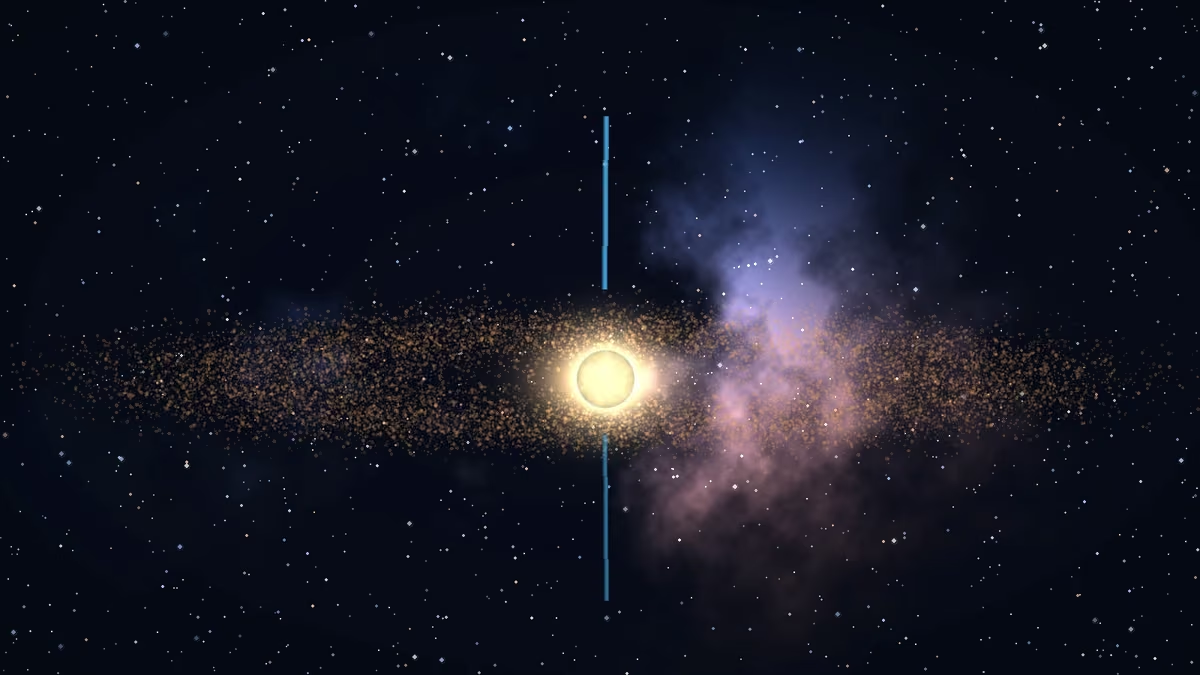
Rocky planets may develop as these bodies merge and differentiate internally. Giant planets may form when sufficiently massive solid cores accumulate substantial gaseous envelopes before the surrounding disk disperses.
NASA describes dust growth, planetesimal formation, and accretion as important stages in this process. [9]
A single protoplanetary disk can contain multiple regions in which planets develop. This helps explain why multi-planet systems are common and why their planets may have different masses, compositions, and orbital distances.
What Keeps Planets Gravitationally Connected to Stars?
Planets remain in orbit because of gravitational binding and their orbital motion. A planet’s velocity and the gravitational attraction of its host produce a trajectory around the system’s center of mass.
According to Newtonian orbital mechanics, the gravitational attraction between two objects depends on their masses and the distance separating them. For a planet in a stable, bound orbit, its kinetic energy and gravitational potential energy together determine the orbit’s characteristics.
The planet does not simply fall vertically into its star because it possesses sideways orbital velocity.
In multi-planet systems, the planets also exert gravitational forces on one another. These interactions can alter eccentricities, inclinations, and orbital periods.
Long-term orbital stability depends on factors including planetary masses, orbital spacing, resonances, and the gravitational influence of other bodies. Some configurations remain stable for billions of years, while others become dynamically unstable.
How Do Planetary Orbits Differ Between Systems?
Planetary orbits can be described using several measurable parameters. The orbital period is the time required to complete one revolution around the host. The semi-major axis describes the size of an elliptical orbit, while orbital inclination describes its orientation relative to a reference plane.
Orbital eccentricity indicates how strongly an orbit departs from a circle. Together, these parameters help astronomers reconstruct planetary-system architecture.
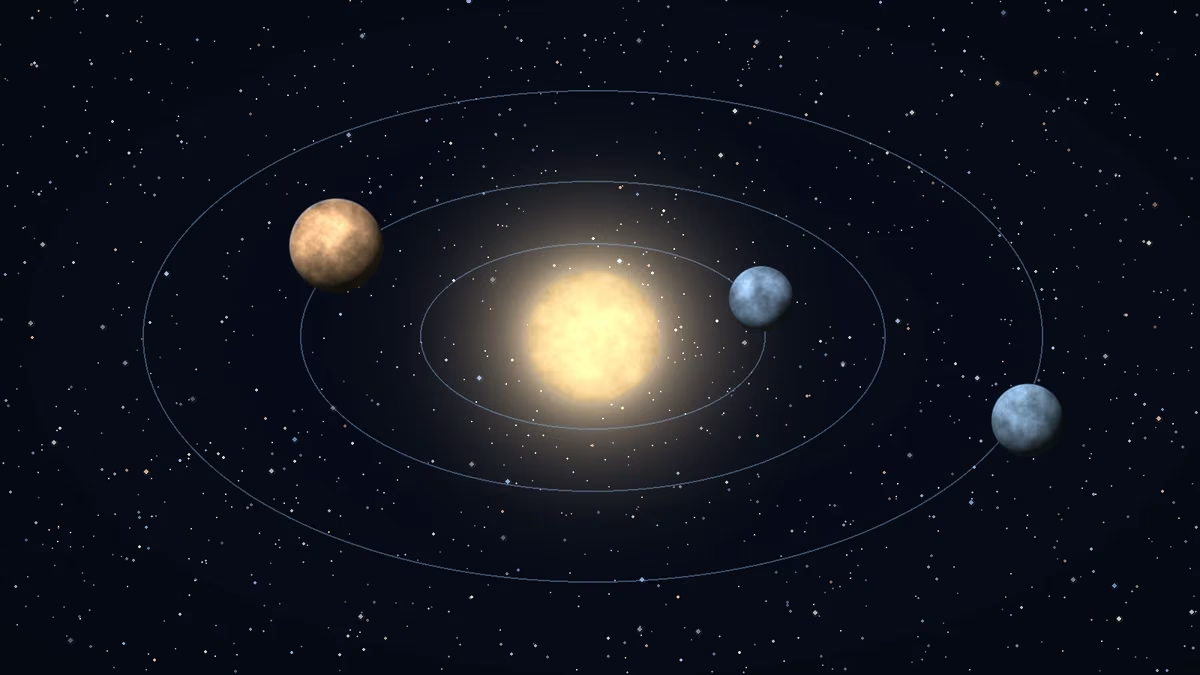
Some exoplanets complete an orbit in less than one Earth day. Others follow much wider trajectories that may take decades, centuries, or longer.
Orbital geometry also affects detection. Transits occur only when an orbit is sufficiently aligned with the observer’s line of sight, while radial velocity measurements depend partly on orbital inclination.
Consequently, two systems containing similar planets may produce very different observational signals.
How Do Astronomers Calculate the Number of Planetary Systems in the Milky Way?
Astronomers estimate unseen planetary populations by combining stellar observations with statistical models of planet occurrence. This approach is necessary because most planets in the galaxy are too small, faint, or distant to detect individually.
Reliable population estimates require careful treatment of sampling, observational biases, completeness, and uncertainty. The number of confirmed discoveries is a starting point, but it cannot be used directly as the total planetary population or the total number of planetary systems.
How Can Observations of a Small Region Represent an Entire Galaxy?
Astronomers use statistical extrapolation to estimate planetary populations from observed samples. A survey may study thousands of stars, measure the frequency of particular planets, and apply the resulting occurrence rates to a much larger stellar population.
For a simplified model involving single stars, the number of planet-hosting systems can be expressed as:
[ N_{\mathrm{systems}}\approx N_{\mathrm{stars}}\times f_{\mathrm{host}} ]
Here, (N_{\mathrm{stars}}) is the number of stars and (f_{\mathrm{host}}) is the estimated fraction of stars with at least one planet.
For example, if a hypothetical galaxy contained 200 billion single stars and 60% hosted planets, the model would produce 120 billion planetary systems. This is an illustrative calculation, not an observational estimate for the Milky Way.
Real analyses are more complicated. Astronomers account for binary stars, different stellar populations, planetary detection completeness, and possible variations in occurrence rates across the galaxy.
Importantly, the average number of planets per star cannot simply replace the fraction of stars hosting planets. [4] [26]
Why Are Some Planetary Systems Easier to Discover Than Others?
Planetary surveys are affected by selection bias, meaning certain objects are more likely to appear in observations than others.
For example, large planets passing in front of small stars produce relatively strong transit signals. Short-period planets may transit many times during an observing campaign, making their periodicity easier to establish.
By contrast, a small planet on a distant orbit may produce a weak signal only once during the same observation period.
Detection completeness measures the fraction of planets with specified properties that a survey would recover if those planets were present. Scientists assess completeness using simulations, injected artificial signals, and measurements of instrumental sensitivity.
Correcting for selection bias is essential. Without these adjustments, the observed population would misleadingly suggest that easily detected planet types are much more common than difficult-to-detect worlds.
How Do Scientists Distinguish Real Planets from Misleading Signals?
Exoplanet observations can produce false positives, signals resembling planets that originate from other physical or instrumental causes.
An eclipsing binary star system can imitate a planetary transit if its light is blended with a brighter foreground star. Stellar spots, pulsations, and instrumental artifacts may also create brightness variations.
Astronomers investigate these possibilities through additional photometric observations, stellar spectroscopy, radial velocity measurements, imaging, and analysis of the transit’s shape and timing.
In some cases, a planet is dynamically confirmed through its gravitational effects. In others, researchers use statistical validation to show that alternative explanations are sufficiently improbable.
Confirmation standards are important because erroneous detections would distort both individual planetary-system descriptions and the occurrence rates used in galactic population calculations. [6]
Why Is the Exact Number of Planetary Systems Still Unknown?
The exact number remains unknown primarily because the Milky Way is too large and its planets are too difficult to observe individually.
Detection sensitivity is the ability of an instrument or observing technique to detect signals of a particular strength. Small planets, faint host stars, distant systems, and long orbital periods can all fall below the sensitivity limits of current observations.
Interstellar dust also obscures portions of the galaxy, especially toward the Galactic Center. Multiple stars may overlap in a telescope’s field of view, making individual measurements difficult.
Even future observatories will not necessarily detect every planet around every star. Instead, improved sensitivity and better statistical models should produce more informative estimates with smaller uncertainties.
A scientifically reliable galactic census must therefore distinguish measured objects from statistically inferred populations.
How Do Astronomers Discover Planets Beyond Our Solar System?
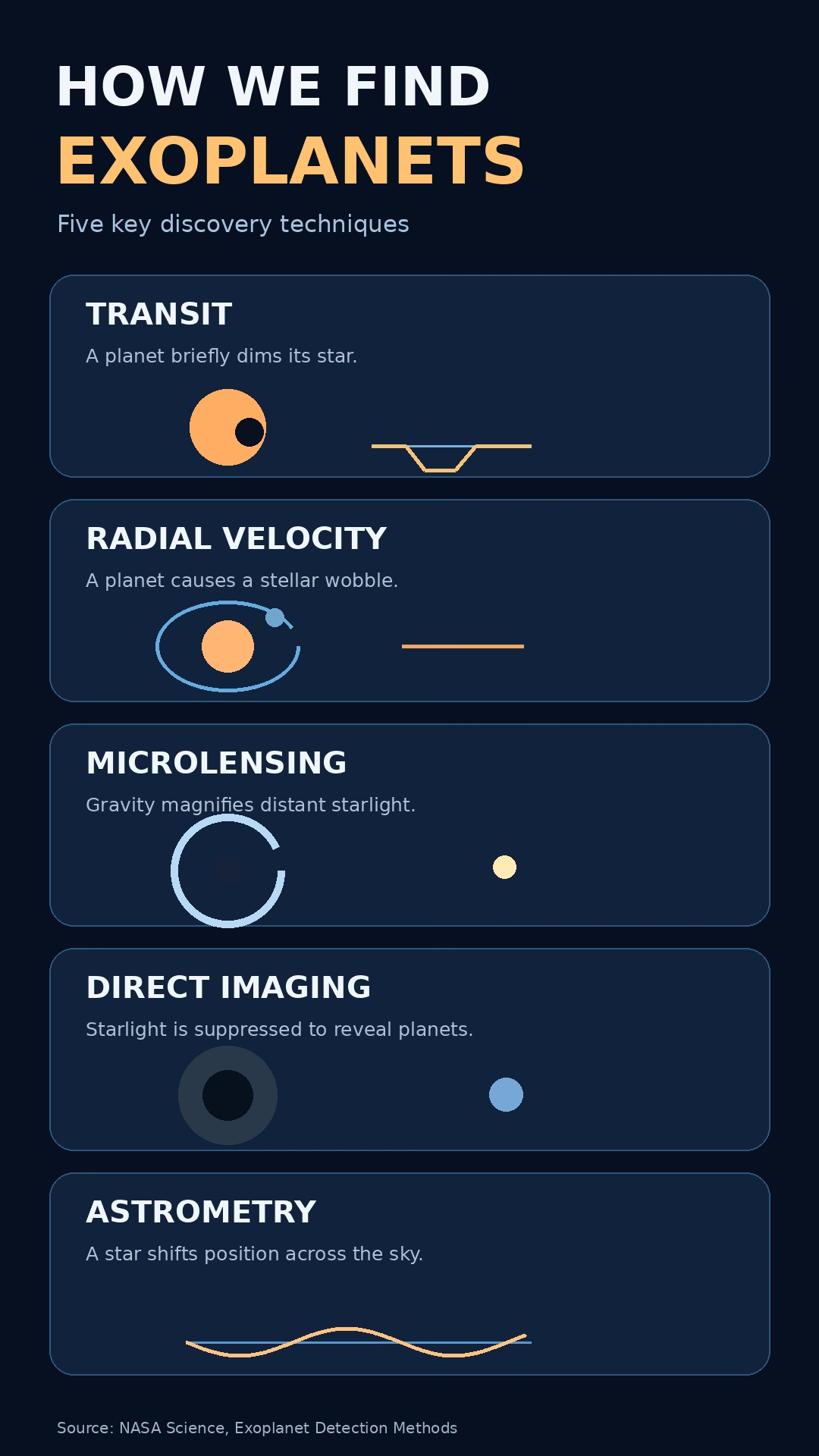
Astronomers discover exoplanets using several complementary techniques. Most do not require a telescope to photograph the planet itself. Instead, researchers measure how a planet changes its host star’s brightness, motion, or apparent position.
Different methods detect different planetary populations. This diversity is valuable because combining their results reduces the limitations inherent in any single approach and improves estimates of planet occurrence across a wider range of masses and orbital distances. [8]
How Does the Transit Method Reveal Exoplanets?
The transit method detects planets when they pass between their host stars and the observer, blocking a small fraction of the starlight.
Astronomers record stellar brightness over time and construct a light curve. When a planet transits, the light curve shows a temporary decrease in brightness. Repeated dips at regular intervals can reveal the planet’s orbital period.
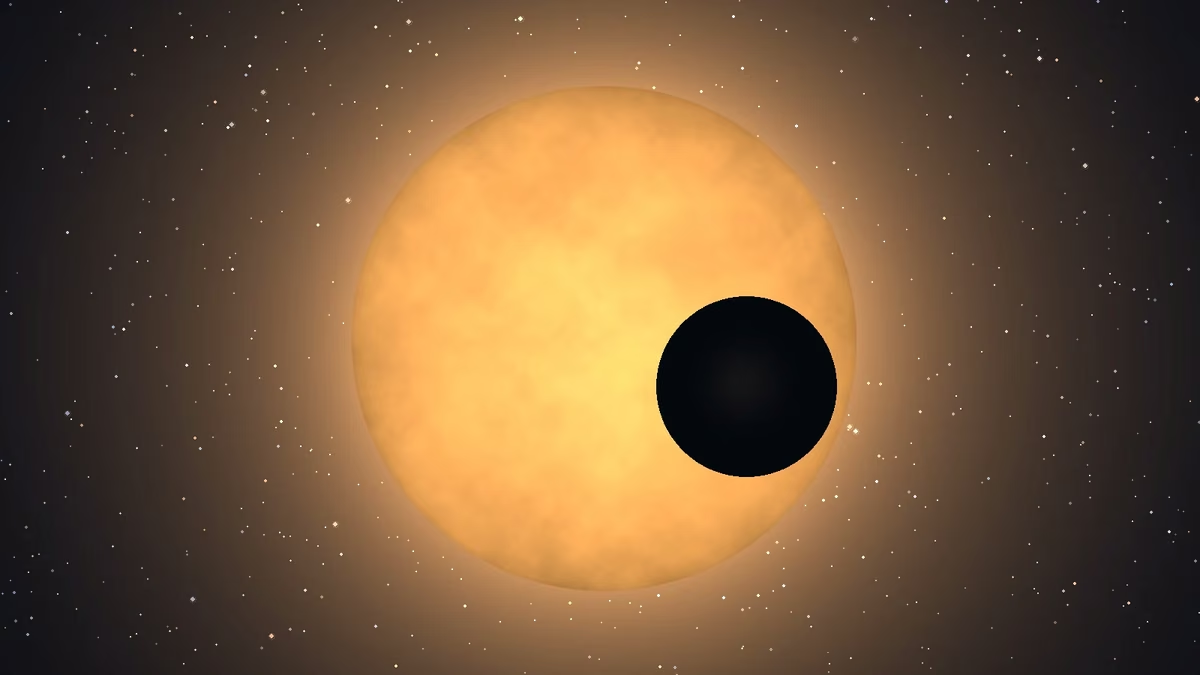
For a small planet passing across a uniformly bright star, the approximate transit depth is:
[ \delta\approx\left(\frac{R_p}{R_\star}\right)^2 ]
Here, (R_p) is the planet’s radius and (R_\star) is the star’s radius.
This relationship explains why large planets are easier to detect through transits, particularly around smaller stars.
However, transits are visible only from favorable orbital orientations. This geometric limitation means that many real planetary systems cannot be detected through transits from Earth. [31]
How Does the Radial Velocity Method Detect Planets?
The radial velocity method detects small changes in a star’s motion toward or away from an observer.
A planet and its host star both orbit their shared center of mass. As the star moves, its spectral lines shift slightly because of the Doppler effect. These changes allow astronomers to measure the star’s radial velocity over time.
A sufficiently regular signal may indicate the gravitational influence of an orbiting planet.
The method can constrain planetary mass, but without additional information, it generally provides a minimum mass rather than the true mass because orbital inclination may be unknown.
Radial velocity observations are particularly useful when combined with transit measurements. Transits can constrain a planet’s radius and inclination, while radial velocity measurements help determine its mass. Together, these properties allow scientists to estimate planetary density and investigate composition.
How Can Gravity Reveal Planets That Telescopes Cannot Directly See?
Gravitational microlensing occurs when the gravity of a foreground object bends and magnifies light from a more distant background source.
If a foreground star has an orbiting planet, that planet can introduce a brief additional feature into the observed brightening pattern. Astronomers analyze the resulting microlensing light curve to estimate the properties of the lensing system.
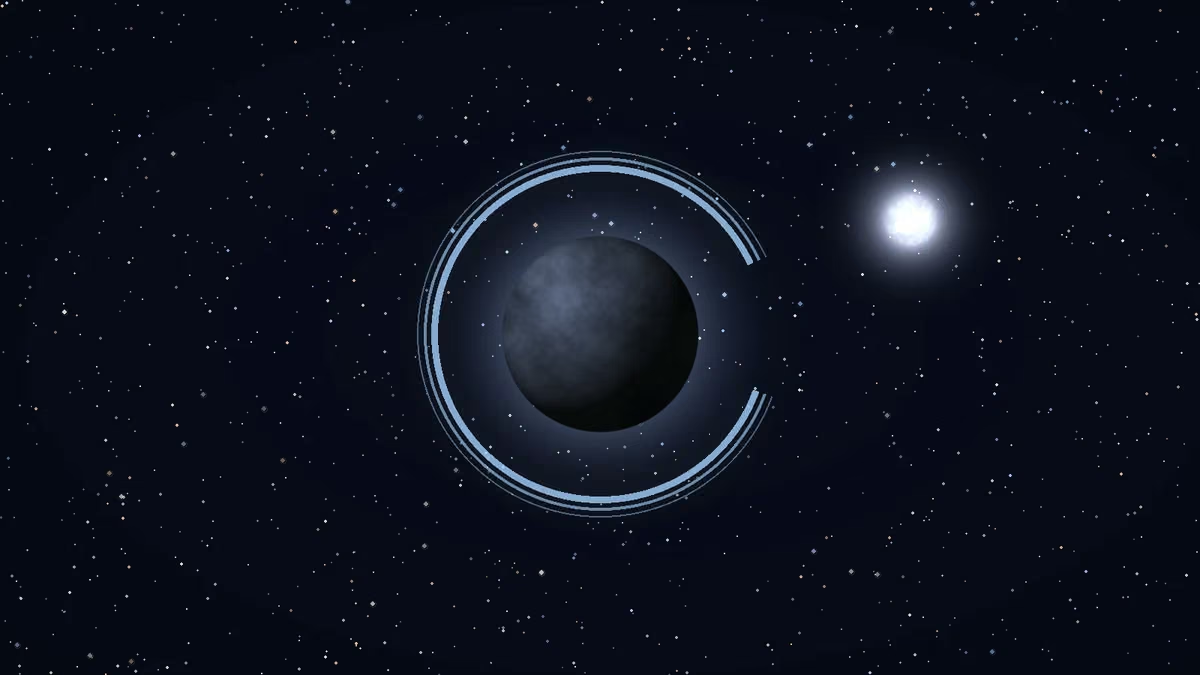
Microlensing is valuable because it can detect planets at greater distances from their host stars than many transit and radial velocity surveys typically probe.
It also enables research into planetary populations located much farther across the Milky Way, including regions toward the Galactic Center.
Microlensing events are usually not repeatable in the same configuration, making detailed follow-up more challenging. Nevertheless, statistical analyses of such events have provided important evidence that planets are common throughout the galaxy. [4]
Can Astronomers Photograph Exoplanets Directly?
Yes, although direct imaging remains technically challenging. Host stars are much brighter than their planets, and the angular separation between a planet and its star can be extremely small.
Astronomers use specialized instruments, including coronagraphs and advanced image-processing techniques, to suppress starlight and detect faint planetary light.
Young, massive planets on relatively wide orbits are particularly suitable targets because they may retain substantial heat from their formation and emit detectable infrared radiation.
Direct imaging provides valuable information about planetary atmospheric composition, temperature, and orbital motion.
The HR 8799 system demonstrates the scientific potential of this technique. Researchers have directly imaged its four giant planets and used Webb observations to investigate atmospheric carbon dioxide and the planets’ formation histories. [14]
Can the Movement of a Star Reveal an Unseen Planet?
Astrometry is the precise measurement of celestial positions and their changes over time. An orbiting planet can cause its host star to move in a small pattern across the sky.
Unlike radial velocity measurements, which track motion along the observer’s line of sight, astrometry measures positional movement perpendicular to that direction.
For sufficiently well-measured systems, astrometry can help determine orbital inclination and planetary mass. It may also reveal companions that are difficult to detect through transits.
The technique requires extremely accurate measurements because planetary-induced stellar movements are generally tiny at interstellar distances.
ESA’s Gaia mission has greatly improved stellar position, distance, and motion measurements. These data are important both for identifying gravitational companions and for determining the properties of stars that host exoplanets. [5]
How Much of the Milky Way Can Telescopes Actually Survey?
No existing exoplanet survey has conducted a complete planet-by-planet census of the Milky Way.
A telescope’s field of view defines the angular region of the sky it observes at one time. Its sensitivity, wavelength coverage, spatial resolution, and observing duration determine which stars and planetary signals it can investigate.
An observational horizon is not necessarily a fixed physical boundary. For an exoplanet survey, practical detection distance depends on the properties of the target and the observational method.
Kepler concentrated on a relatively limited region of the sky, while TESS surveys a much larger portion of the sky, emphasizing relatively bright stars.
Other approaches, including microlensing and astrometry, probe different stellar populations. Combining their data provides a more representative understanding of the galaxy than relying on a single survey. [8] [10]
Which Space Telescope Missions Have Discovered Planetary Systems?
Space telescopes have played a central role in the development of exoplanet science. By observing above Earth’s atmosphere, they can monitor subtle stellar brightness changes and investigate faint targets with instruments designed for high-precision measurements.
Different missions contribute different kinds of evidence. Some specialize in discovering planets, while others study stellar properties, planetary atmospheres, or orbital dynamics. Together, these observatories help astronomers understand both individual planetary systems and the broader galactic population.
How Did the Kepler Space Telescope Change Our Understanding of Planets?
NASA launched the Kepler Space Telescope in 2009 to investigate how common planets are around other stars, with particular interest in small planets and potentially habitable environments.
Kepler continuously monitored large numbers of stars, searching for the repeated brightness changes caused by planetary transits. Its extended K2 mission continued after the original observing configuration was affected by spacecraft hardware failures.
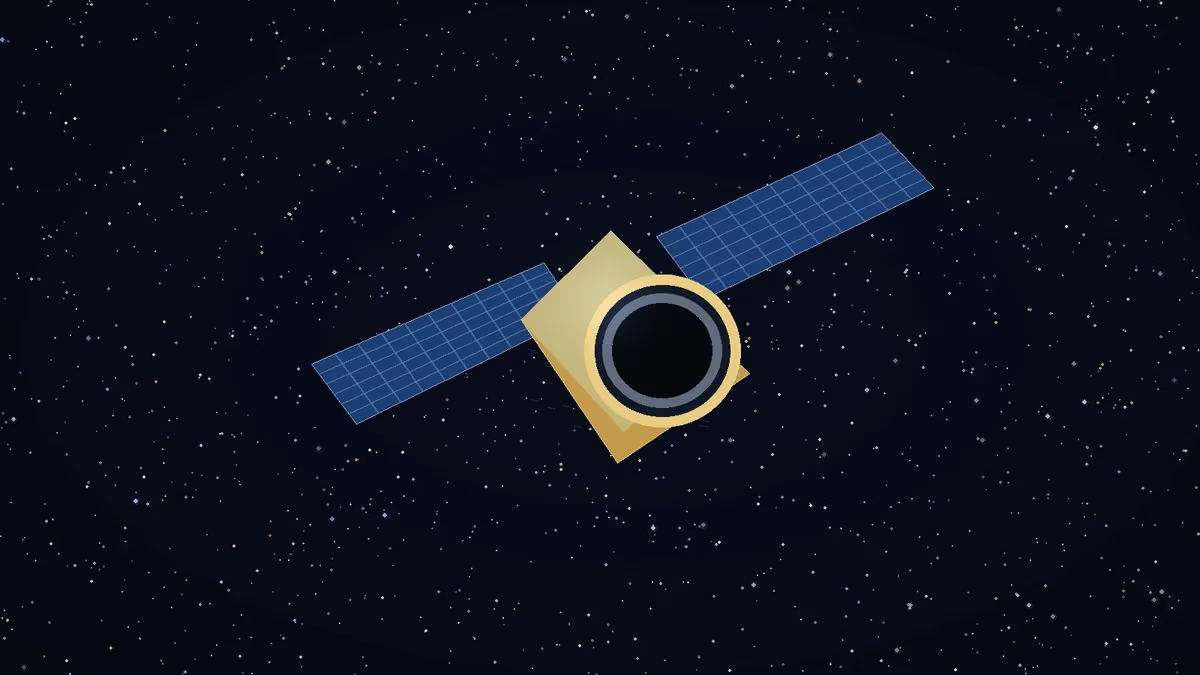
Kepler operations ended in 2018, but scientists continue analyzing its observations and confirming planets from its archival data.
The mission demonstrated that small planets are widespread and revealed planetary arrangements unlike those found in our Solar System.
Kepler’s importance extends beyond the number of confirmed discoveries. By characterizing detection completeness, its survey helped researchers calculate planet occurrence rates across different orbital periods, stellar populations, and planetary sizes. [10]
How Do Astronomers Track Confirmed Exoplanets and New Discoveries?
The NASA Exoplanet Archive maintains records of confirmed planets, candidate discoveries, planetary characteristics, and their host stars. Researchers can access these records through searchable tables and data services.
The archive is continuously updated as new studies are published and existing measurements are revised.
NASA’s Transiting Exoplanet Survey Satellite (TESS), launched in 2018, searches for transiting planets around relatively bright stars across large regions of the sky.
Unlike Kepler’s original long-duration survey of one comparatively small field, TESS systematically surveys numerous sky sectors.
This strategy identifies nearby, observable targets that are particularly useful for follow-up studies with ground-based instruments and space telescopes such as Webb.
As of November 5, 2026, the NASA Exoplanet Archive attributed 1,024 confirmed planet discoveries to TESS. [2] [7]
How Do the James Webb and Gaia Missions Improve Planetary Research?
The James Webb Space Telescope and ESA’s Gaia contribute complementary capabilities to exoplanet research.
Webb uses infrared observations and spectroscopy to investigate planetary atmospheres, thermal emission, and the chemistry of selected exoplanets. These measurements can reveal atmospheric molecules and constrain physical conditions.
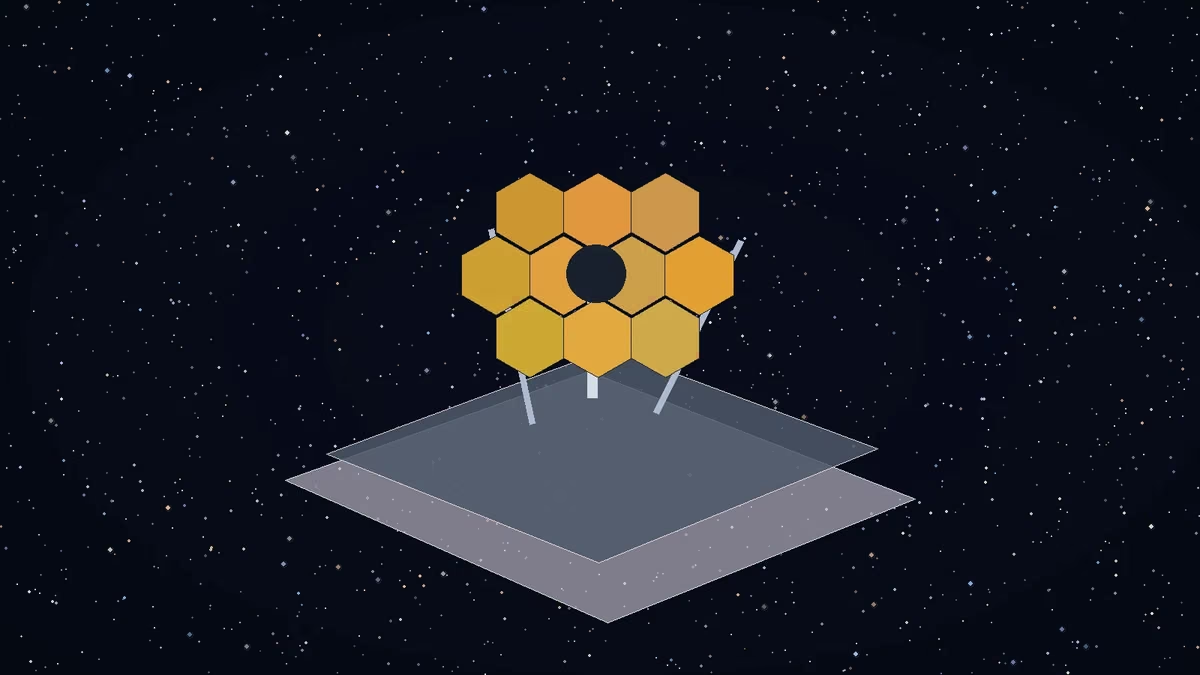
Gaia specializes in precise measurements of stellar positions, distances, and motions.
Gaia’s observing operations ended in January 2025, after the spacecraft had gathered more than three trillion observations of approximately two billion stars and other objects. Its extensive data products continue supporting astronomical research. [5]
Accurate stellar distances and radii are essential because planetary characteristics are often derived relative to their host stars.
A more accurate stellar radius can improve a transiting planet’s estimated radius, while better stellar mass measurements can refine orbital and planetary-mass calculations.
What Can Roman and Hubble Contribute to Exoplanet Discoveries?
The Hubble Space Telescope has made major contributions to atmospheric spectroscopy and planetary-system characterization. Its observations helped establish that astronomers can investigate the chemical composition of atmospheres around distant planets.
NASA’s Nancy Grace Roman Space Telescope is designed to expand exoplanet research through wide-field infrared surveys, gravitational microlensing, and coronagraph technology.
Roman launched on August 30, 2026. NASA reported on October 22, 2026, that the observatory had entered its final science-commissioning phase, with instrument calibration underway ahead of routine scientific operations. [11] [30]
Roman’s planned microlensing surveys are particularly important for understanding planets at larger orbital separations and across distant regions of the Milky Way.
Its observations should complement Kepler and TESS rather than simply duplicate their results.
| Mission | Primary contribution | Importance for estimating planetary populations |
|---|---|---|
| Kepler/K2 | Precision transit surveys | Planet occurrence rates and planetary multiplicity |
| TESS | Wide-sky transit discoveries | Nearby planet-host systems and follow-up targets |
| Gaia | Precise stellar astrometry | Host-star distances, masses, and orbital measurements |
| James Webb | Infrared spectroscopy and imaging | Planetary atmospheres, composition, and formation |
| Hubble | Spectroscopy and planetary observations | Atmospheric characterization and long-term observations |
| Roman | Wide-field microlensing and coronagraphy | Broader population statistics, distant planets, and direct-imaging technology |
What Are the Most Important Planetary Systems Discovered in the Milky Way?
Several extrasolar planetary systems have become particularly important because they demonstrate unusual orbital architectures, multiple planets, different host-star environments, or the effectiveness of new observation methods.
These discoveries should not be interpreted as representative of every planetary system in the galaxy. Many were selected for study precisely because their characteristics make them scientifically interesting or relatively easy to observe. Their greatest value lies in showing how varied planetary systems can be.
What Is the Closest Known Planetary System to Our Solar System?
The nearest stellar neighbor to the Sun is Proxima Centauri, approximately 4.25 light-years away. It is gravitationally associated with the Alpha Centauri system, which also contains the stars Alpha Centauri A and Alpha Centauri B.
Proxima Centauri b is a confirmed planet orbiting Proxima Centauri, a red dwarf star. It was announced in 2016 and completes an orbit in approximately 11.2 Earth days.
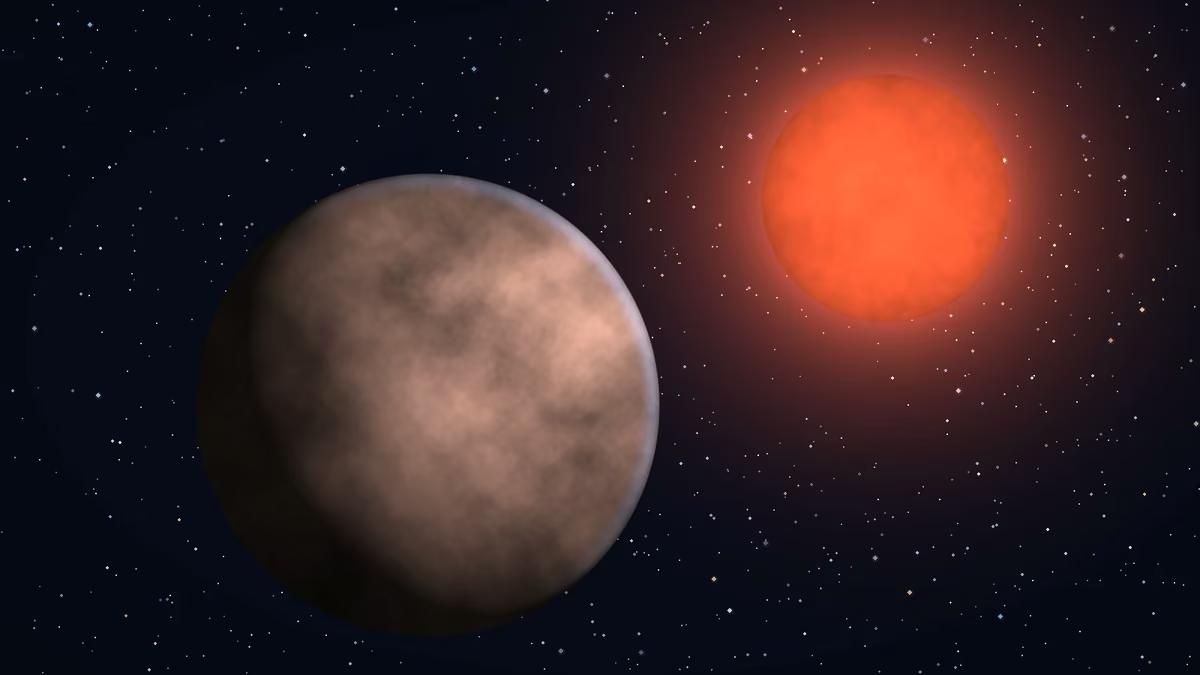
Its orbit falls within the star’s conventional habitable-zone boundaries, making it an important target for research into potentially temperate rocky worlds.
However, Proxima Centauri is an active red dwarf. High-energy radiation and stellar activity may affect the planet’s atmospheric evolution and potential surface conditions. Its location within a habitable zone does not establish that it has liquid water, a surviving atmosphere, or life. [16]
Why Is TRAPPIST-1 Important for Exoplanet Astronomy?
The TRAPPIST-1 planetary system lies approximately 40 light-years from Earth and contains seven confirmed planets orbiting an ultracool red dwarf.
All seven are approximately Earth-sized and are thought to have predominantly rocky compositions. Their orbits are exceptionally compact, with every planet orbiting closer to its star than Mercury does to the Sun.
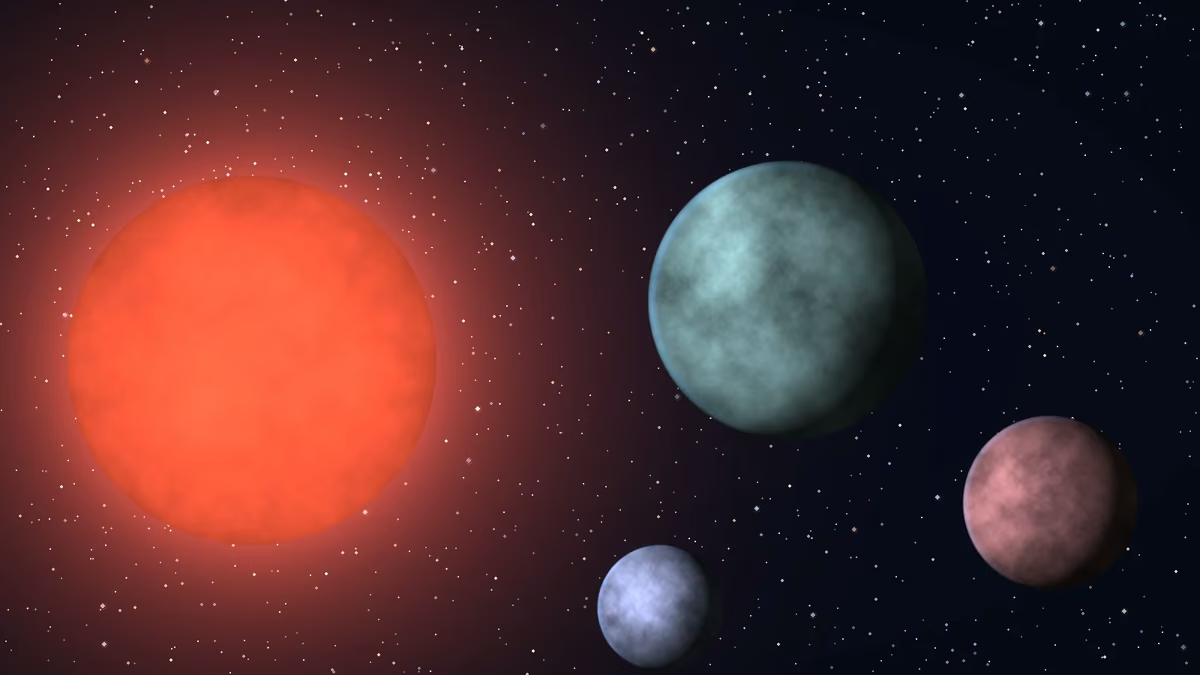
Three of the planets, TRAPPIST-1 e, f, and g, occupy the star’s conventional habitable zone under commonly used assumptions.
However, potential habitability remains uncertain. Webb observations have not established that these planets support life, and the atmospheric properties of several remain under investigation.
NASA’s January 2026 scientific overview reports little evidence for thick atmospheres around the inner planets b and c, while observations of other planets continue to be analyzed. [12]
Are There Planetary Systems with as Many Planets as Our Solar System?
Yes. Kepler-90 is a well-known system containing eight confirmed planets, matching the recognized planetary count of our Solar System.
Its host star resembles the Sun in some characteristics, but the planetary system is much more compact. All eight confirmed planets orbit within a region comparable to Earth’s orbital distance from the Sun.
Some inner planets are relatively small, while larger planets occur farther from the host star, producing a broad architectural resemblance to our Solar System.
The differences are substantial, however. Kepler-90’s known planets are arranged much closer to their star, resulting in significantly different irradiation and environmental conditions.
NASA has identified Kepler-90 as the only known extrasolar eight-planet system in its published comparisons. [13]
Which Planetary Systems Have Been Directly Photographed?
One of the most prominent examples is HR 8799, a young planetary system approximately 130 light-years from Earth.
Four giant planets have been directly imaged around its host star. Their relatively large orbital separations and strong infrared emission make them accessible to techniques that suppress the host star’s overwhelming brightness.
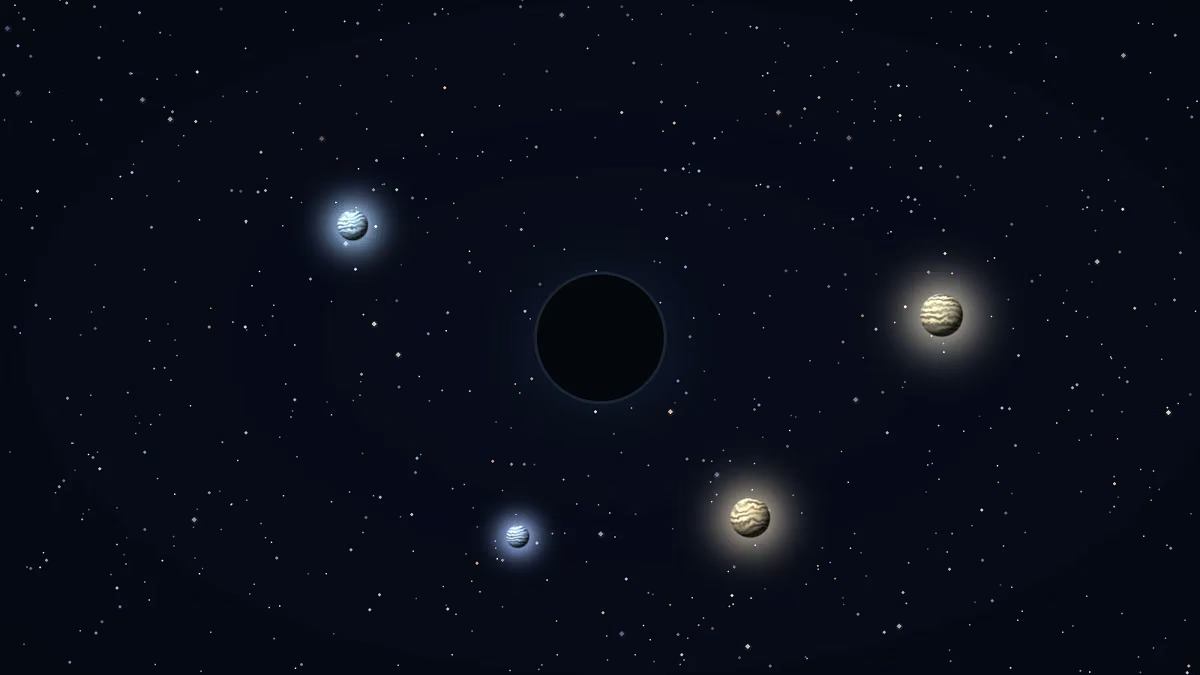
In March 2025, NASA reported that Webb observations detected carbon dioxide in the atmospheres of the four giant planets. The findings supported a formation history involving core accretion, similar in broad mechanism to models used for Jupiter and Saturn. [14]
Direct imaging is especially useful because astronomers can investigate planetary atmospheric properties without relying exclusively on transits.
HR 8799 therefore provides an important comparison with compact systems discovered by Kepler and TESS.
What Types of Planets Exist in the Milky Way’s Planetary Systems?
Exoplanets exhibit a wide range of physical characteristics. They differ in radius, mass, density, composition, temperature, and orbital properties. Some resemble planets in our Solar System, while others belong to categories that have no close local equivalent.
Astronomers use these properties to classify planets and investigate the processes that formed them. Classification schemes are useful for comparing populations, but categories may overlap and should not be treated as precise descriptions of every planet’s internal structure.
How Do Astronomers Classify Planets by Physical Characteristics?
Planetary classification begins with measurable physical quantities, particularly planetary radius and planetary mass.
Radius describes a planet’s size, while mass quantifies the amount of matter it contains. When both are known, astronomers can calculate its average density and use that information to investigate possible compositions.
High bulk density can suggest a substantial rocky or metallic component, while lower density may indicate a significant gaseous envelope or a composition containing large quantities of volatile materials.
However, density alone rarely determines a unique internal structure. Different combinations of rock, water, ice, and gas may produce similar measurements.
NASA commonly groups exoplanets into terrestrial, super-Earth, Neptune-like, and gas-giant categories. These classifications are broad descriptions rather than rigid physical boundaries. [15]
How Common Are Rocky and Earth-Sized Planets?
A terrestrial planet is a planet composed primarily of rock and metal, generally possessing a substantial solid interior. Mercury, Venus, Earth, and Mars are terrestrial planets in our Solar System.
An Earth-sized planet has a radius comparable to Earth’s, but this does not automatically establish a rocky composition or Earth-like environment.
Small exoplanets are widespread in astronomical surveys. However, their measured occurrence rates depend on the orbital period, stellar category, and planet-size range under investigation.
Kepler observations provided important evidence that small planets are common around many stars.
Even when a distant planet has a radius and mass resembling Earth’s, scientists must still investigate atmospheric conditions, irradiation, temperature, and other properties before discussing its potential habitability.
An Earth-sized planet orbiting extremely close to its star may be much hotter than Earth and unsuitable for surface liquid water.
What Is the Difference Between Gas Giants and Ice Giants?
Gas giants are large planets dominated by hydrogen and helium. Jupiter and Saturn are familiar examples, with extensive gaseous envelopes and no ordinary solid surface comparable to Earth’s.
Ice giants, represented by Uranus and Neptune, contain larger proportions of heavier materials relative to hydrogen and helium. In planetary science, the word ice can refer to substances such as water, ammonia, and methane, including material that may exist in high-pressure fluid phases within a planet.
Exoplanet discoveries have revealed many giant worlds with orbital arrangements different from those of the Solar System.
Some orbit close to their stars, while others occupy distant orbits. Their atmospheric compositions and temperatures can also differ substantially.
Comparing gas giants and ice giants helps astronomers investigate how planetary mass, solid-core formation, atmospheric accretion, and migration affect the final architecture of planetary systems. [15]
What Are Super-Earths and Mini-Neptunes?
Super-Earths are planets larger or more massive than Earth but smaller or less massive than Neptune, depending on the classification scheme used. The label does not mean that a planet necessarily has Earth-like surface conditions.
Some super-Earths may be predominantly rocky, while others could contain substantial volatile components or thick atmospheres.
Mini-Neptunes, also called sub-Neptunes in many studies, generally refer to planets larger than Earth but smaller than Neptune that may possess significant gaseous envelopes.
These categories are important because the Solar System contains no planet directly resembling the common population of short-period super-Earths and mini-Neptunes found around other stars.
Their prevalence suggests that our Solar System is not a complete representation of planetary diversity.
Astronomers investigate these planets to understand atmospheric retention, mass loss, interior composition, and the processes that determine whether a planet becomes primarily rocky or gas-rich. [15]
What Are the Most Unusual Planetary Populations?
Some exoplanets occupy environments very different from those of familiar Solar System planets.
Hot Jupiters are massive gaseous planets orbiting extremely close to their host stars. Their short orbital periods and large transit signals made them relatively accessible to early exoplanet detection methods.
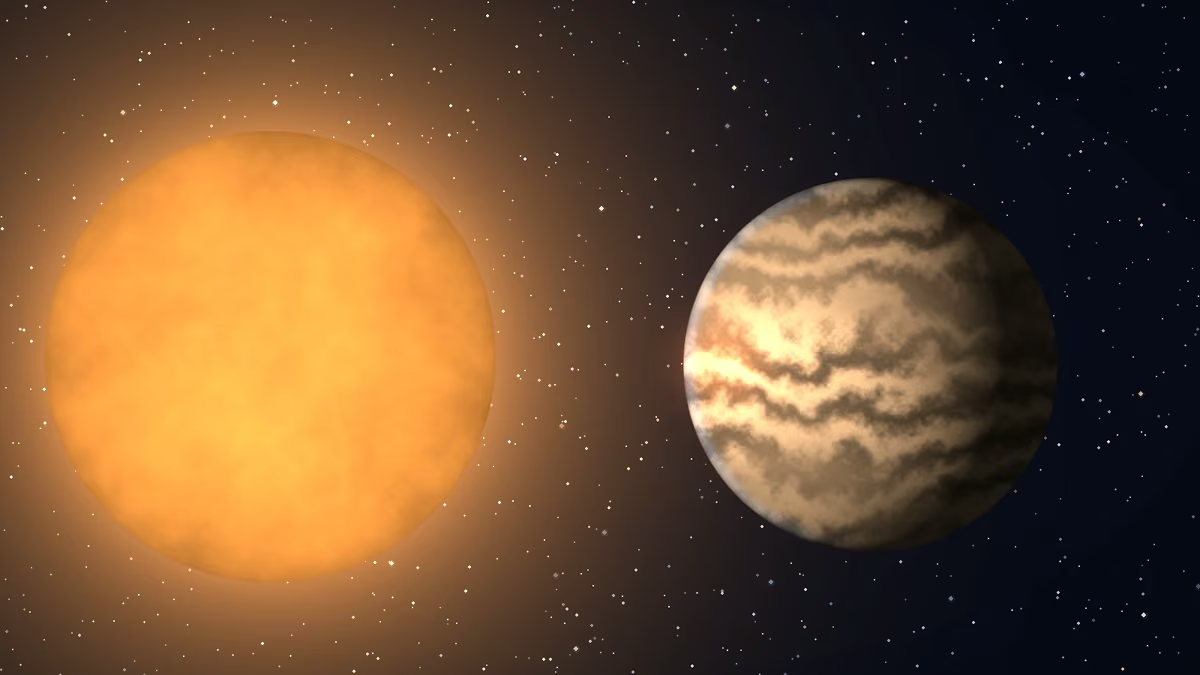
The existence of these planets helped motivate theories of planetary migration, in which gravitational interactions or processes within protoplanetary disks alter a planet’s original orbit.
Another unusual population consists of rogue planets, planetary-mass objects that are not gravitationally bound to stars.
Some may have been ejected from planetary systems, while others may have formed through different gravitational-collapse processes.
Rogue planets complicate attempts to estimate the Milky Way’s total planet population. They may contribute to a census of planetary-mass objects, but they are not automatically counted as members of star-bound planetary systems.
The NASA Exoplanet Archive specifically excludes free-floating planets from its standard confirmed exoplanet catalog. [6] [15]
Could Some of the Milky Way’s Planetary Systems Support Life?
The discovery of widespread planetary systems raises an important scientific question: could some of these environments support life?
Astronomers investigate habitability by studying planetary size, mass, orbital distance, stellar radiation, atmospheric composition, and the possibility of liquid water. However, identifying a potentially habitable environment is not equivalent to discovering inhabited worlds.
Earth remains the only place where life has been conclusively demonstrated. The search for extraterrestrial life therefore requires both astronomical observations and careful consideration of the limits of existing scientific evidence.
What Makes a Planet Potentially Suitable for Life?
The habitable zone is the range of distances from a star where a planet with a suitable atmosphere could potentially maintain liquid water on its surface.
Its approximate location depends strongly on stellar luminosity, the total amount of energy emitted by the star.
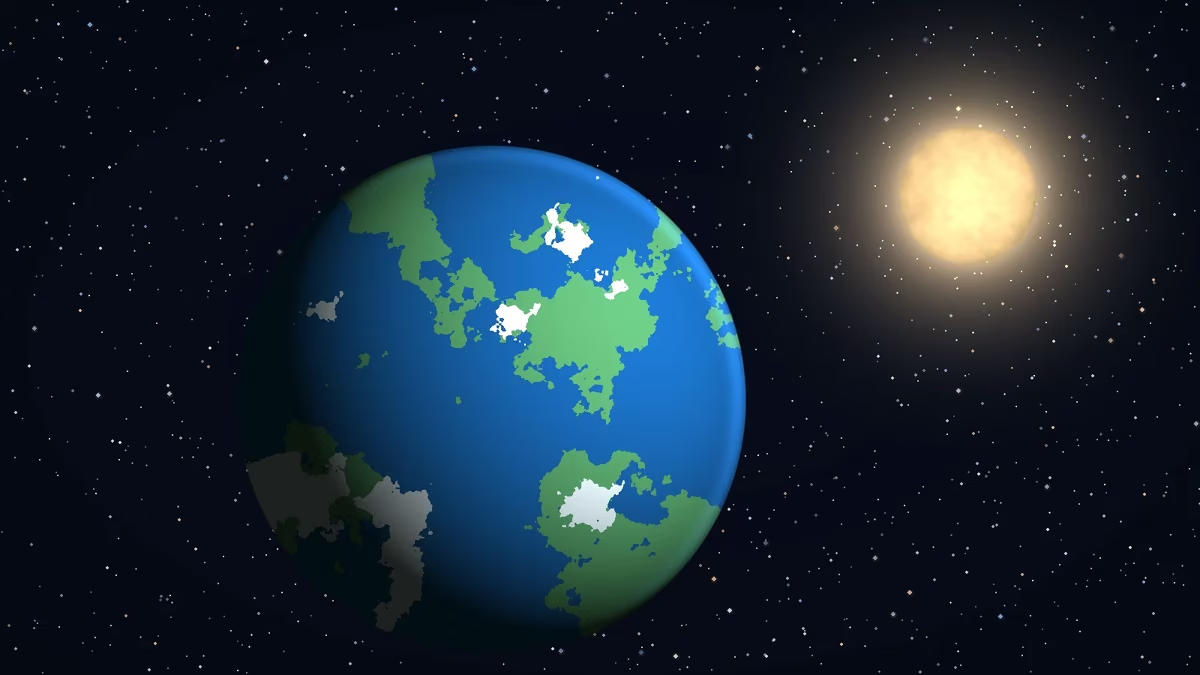
Luminous stars generally have habitable zones at larger orbital distances, while cooler red dwarfs possess habitable zones much closer to their surfaces.
However, orbital distance alone does not establish habitability. Atmospheric pressure, greenhouse gases, planetary rotation, water availability, geological activity, and stellar radiation can influence whether liquid water can remain stable.
Venus demonstrates why location is insufficient. Although it lies near the inner region associated with solar habitability discussions, its dense carbon dioxide atmosphere produces extreme surface temperatures.
The habitable-zone concept is therefore a useful starting point, not a complete definition of environments capable of supporting life. [21]
How Do Scientists Identify Earth-Like or Potentially Habitable Planets?
An Earth-like planet may resemble Earth in selected measurable characteristics, such as radius, mass, density, or received stellar energy. However, different studies apply different definitions, and the term does not establish that a planet has Earth’s atmosphere or surface conditions.
Astronomers often begin by identifying potentially rocky worlds within their host stars’ habitable zones.
They then investigate other factors, including the host star’s activity, the planet’s orbital characteristics, atmospheric retention, and the possibility of liquid water.
Because most exoplanets cannot be observed in sufficient detail to establish surface conditions directly, habitability assessments often involve models and substantial uncertainty.
A planet described as potentially habitable is therefore a candidate for further scientific investigation, not a confirmed environment capable of supporting organisms.
Can Astronomers Detect Signs of Life on Exoplanets?
Astronomers investigate possible signs of life partly by studying exoplanet atmospheres through spectroscopy.
During a planetary transit, some starlight may pass through the planet’s atmosphere. Different atmospheric molecules absorb particular wavelengths, producing spectral features that can help researchers identify chemical constituents.
Scientists are interested in potential biosignatures, observable characteristics that might indicate biological activity.
Examples include certain atmospheric chemical combinations, especially when they appear difficult to maintain through known nonbiological processes.
However, oxygen, methane, and other potentially relevant gases can also have abiotic sources. A single molecule should not automatically be interpreted as evidence of life.
Reliable biosignature interpretation requires consideration of the host star, planetary environment, atmospheric chemistry, and possible false-positive mechanisms.
No confirmed extraterrestrial biosignature has established the existence of life beyond Earth. [23] [25]
Are Some Regions of the Milky Way More Favorable for Life?
The Galactic Habitable Zone is a scientific hypothesis proposing that some galactic environments may offer more favorable conditions for the long-term development of potentially habitable planets.
The concept considers factors such as the abundance of heavy elements required for rocky-planet formation, stellar density, and exposure to energetic astronomical events.
Regions with very low metallicity may have different planet-formation histories, while dense stellar environments could experience greater exposure to certain disruptive processes.
However, the hypothesis does not establish a sharply defined region within which life must exist.
The relative importance of radiation, supernovae, stellar encounters, and chemical enrichment is still being investigated. Planetary atmospheres, magnetic environments, and biological resilience could also influence outcomes.
Consequently, the Galactic Habitable Zone should be understood as a framework for research rather than a confirmed map of inhabited or uninhabited regions. [24]
Could Billions of Planetary Systems Mean Billions of Civilizations?
The existence of billions of planetary systems provides many possible environments where life could, in principle, develop. However, the number of planets alone cannot determine how many worlds support biology or intelligent civilizations.
The Drake Equation, proposed by astronomer Frank Drake, organizes factors relevant to estimating the number of detectable technological civilizations in the Milky Way.
These factors include the rate of star formation, the fraction of stars with planets, the number of potentially suitable worlds, and the probabilities associated with life, intelligence, technology, and civilization longevity.
Astronomical discoveries have improved our understanding of planetary abundance. Nevertheless, the biological and technological factors remain highly uncertain.
NASA has stated that no credible evidence has established the existence of extraterrestrial life. [22] [23]
A galaxy containing billions of planetary systems may offer extraordinary possibilities, but the existence of extraterrestrial civilizations remains an open scientific question.
Frequently Asked Questions About Solar Systems in the Milky Way
The following answers summarize the most common questions about the number, location, discovery, and characteristics of planetary systems in our galaxy. Because exoplanet catalogs are regularly updated, confirmed discovery totals are identified by date.
A central distinction applies throughout these answers: the number of stars, the number of confirmed planets, the number of confirmed planetary systems, and the total estimated planetary population are different measurements. Confusing these categories can produce misleading astronomical statistics.
How Many Solar Systems Are There in the Milky Way Galaxy?
The Milky Way likely contains billions of planetary systems, potentially hundreds of billions, but their exact number is unknown. Scientific observations show that planets are common around stars, while the galaxy is estimated to contain 100 billion to 400 billion stars.
The term Solar System technically refers to the system surrounding our Sun. For systems around other stars, planetary system or extrasolar planetary system is more precise. There is no complete census of every planetary system in the Milky Way.
Are There 100 Billion Solar Systems in the Milky Way?
There could be at least 100 billion planetary systems, but that figure has not been established as an exact or formally verified count. The frequently cited figure of 100 billion primarily comes from the lower end of estimates of the Milky Way’s stellar population.
Many stars host planets, but some stellar systems contain multiple stars, and one planetary system can contain many planets. Researchers must account for these differences before estimating the number of distinct planetary systems.
How Many Stars Are in the Milky Way Galaxy?
NASA estimates that the Milky Way contains approximately 100 billion to 400 billion stars. The substantial range reflects uncertainties in stellar population models, the distribution of faint low-mass stars, and the difficulty of observing regions hidden by interstellar dust.
Astronomers combine surveys, stellar brightness measurements, distance estimates, and models of galactic structure to calculate the population. The estimate is not obtained by directly counting every star individually. [1] [5]
Does Every Star in the Milky Way Have Planets?
Not every star has been demonstrated to possess planets, and astronomers cannot yet say that every star is accompanied by a planetary system.
However, exoplanet research indicates that planets are widespread and that stars hosting planets are not unusual. Studies of planetary occurrence find that the average number of planets per star can be substantial across the planetary populations examined.
A star without detected planets may still have distant, small, or otherwise difficult-to-detect companions.
How Many Planets Are There in the Milky Way?
The Milky Way is believed to contain hundreds of billions of planets, and its total population may be larger than its stellar population.
NASA reports evidence that planets are at least as numerous as stars on average. Since the galaxy contains roughly 100 billion to 400 billion stars, the implied planetary population is enormous.
These figures are statistical estimates, not individual planet counts. The total may also depend on whether free-floating planetary-mass objects are included. [1] [4]
How Many Planetary Systems Have Scientists Discovered?
As of November 5, 2026, the NASA Exoplanet Archive listed 6,464 confirmed exoplanets. An independently maintained aggregation of the archive’s records reported approximately 4,857 distinct planetary systems in early November 2026. [2] [29]
The distinction matters because several confirmed planets can orbit the same star or stellar system.
The system count is a catalog-derived figure and may change with grouping conventions, record revisions, and newly confirmed discoveries. Readers seeking the latest data should consult the NASA Exoplanet Archive directly.
What Is the Closest Solar System to Earth?
The closest known planetary system outside our own is associated with Proxima Centauri, the nearest star to the Sun, approximately 4.25 light-years away.
Proxima Centauri belongs to the wider Alpha Centauri stellar system and hosts the confirmed exoplanet Proxima Centauri b.
The planet orbits a red dwarf and is an important subject of nearby exoplanet research. Its proximity does not make it easily accessible to spacecraft, and its potential habitability remains scientifically uncertain. [16]
Can a Solar System Have Two Suns?
Yes. Planets can exist in binary-star systems, where two stars are gravitationally associated. Some planets orbit one member of the binary, while others follow circumbinary orbits around both stars.
Kepler-16 b provides a confirmed example of a planet orbiting two stars.
Such discoveries demonstrate that planet formation is not restricted to stars resembling the solitary Sun. However, orbital stability depends on the stellar configuration and the planet’s orbital characteristics. [27]
What Is the Largest Known Planetary System?
The answer depends on how largest is defined. A system could be described as large because of its confirmed planet count, the extent of its planetary orbits, or the overall mass of its planetary companions.
By confirmed planet count, Kepler-90 is a notable system with eight recognized planets, matching our Solar System. However, its planetary orbits occupy a much smaller region.
Systems containing distant planetary companions may be physically more extended, but orbital-boundary definitions can be complicated. There is no single universally useful ranking that identifies the largest planetary system under every interpretation.
Are There Solar Systems with More Than Eight Planets?
Planetary systems containing more than eight planets are physically possible, but none has been established as a confirmed system with nine or more recognized planets in the authoritative examples reviewed for this article.
Our Solar System and Kepler-90 each have eight recognized planets. Systems with additional undetected planets may exist.
Because small and distant planets are difficult to observe, the maximum confirmed planet count should not be treated as a physical upper limit on how many planets a system can form. [13]
How Do Scientists Discover Other Solar Systems?
Astronomers use several techniques to identify planets beyond our Solar System. Transit observations measure temporary changes in stellar brightness, while radial velocity observations detect gravitationally induced stellar motion.
Gravitational microlensing detects planetary influences on the magnification of background starlight. Direct imaging attempts to separate light emitted or reflected by planets from their host stars.
Astrometry measures tiny changes in stellar positions. Combining multiple techniques helps astronomers confirm planetary discoveries and investigate their physical and orbital properties. [8]
How Far Away Are Other Planetary Systems?
Other planetary systems exist at distances ranging from a few light-years to many thousands of light-years or more.
The nearest known exoplanet-hosting star, Proxima Centauri, is approximately 4.25 light-years away. Many planets discovered by Kepler are hundreds or thousands of light-years from Earth.
Astronomers commonly express these distances in light-years or parsecs. Even the closest systems are extremely distant compared with the scale of planetary orbits within our Solar System.
Are There Earth-Like Planets in Other Solar Systems?
Astronomers have confirmed numerous exoplanets with sizes or masses resembling those of Earth. Some orbit within the habitable zones of their host stars.
However, Earth-like size is not the same as Earth-like environmental conditions.
Scientists generally cannot determine whether most such planets have oceans, stable surface temperatures, breathable atmospheres, or suitable conditions for life. Additional measurements of planetary mass, radius, atmosphere, and stellar environment are required before making stronger habitability assessments.
Could Alien Life Exist in Other Planetary Systems?
Life could potentially exist elsewhere in the Milky Way, but no confirmed scientific discovery has established extraterrestrial life.
The galaxy contains an enormous variety of planetary environments, including rocky worlds and planets receiving amounts of stellar energy compatible with certain theoretical models of habitability.
Scientists investigate these systems through atmospheric spectroscopy, planetary modeling, and searches for possible biosignatures. Nevertheless, a potentially habitable planet is not necessarily inhabited, and detecting an atmospheric molecule is not automatically evidence of biological activity.
Will Astronomers Ever Know the Exact Number of Planetary Systems?
Astronomers may eventually estimate the galactic planetary-system population much more accurately, but obtaining an exact count of every system is unlikely with foreseeable observational technology.
The Milky Way contains vast numbers of faint and distant stars, many hidden behind dust or crowded into dense stellar regions. Their planets may be too small or too distant from their hosts to produce measurable signals.
Future observatories, including Roman, can improve statistical constraints on previously underrepresented planetary populations. Better estimates may emerge even without an exhaustive planet-by-planet census.
Conclusion: How Many Planetary Systems Are Really in the Milky Way?
The Milky Way almost certainly contains billions of planetary systems, and its population may extend into the hundreds of billions. However, astronomers have not determined an exact number of planetary systems throughout our galaxy.
NASA estimates that the Milky Way contains approximately 100 billion to 400 billion stars. Studies of exoplanet occurrence indicate that planets are common and that the number of planets is comparable to or greater than the number of stars.
These findings do not mean that each star hosts exactly one planet or that the number of planets equals the number of distinct planetary systems.
As of November 5, 2026, astronomers had confirmed 6,464 exoplanets in the NASA Exoplanet Archive, representing only a minute portion of the expected galactic planetary population.
Kepler, TESS, Gaia, Webb, Hubble, Roman, and ground-based observatories collectively help scientists discover new planets, measure their characteristics, investigate planetary formation, and refine estimates of their abundance.
The most important scientific conclusion is not simply that our galaxy contains an enormous number of planetary systems. It is that planetary systems are widespread, remarkably diverse, and formed through processes that occur across many different stellar environments.
Our Solar System is one example within an immense and still largely unexplored galactic population.
Sources
The references below prioritize NASA, ESA, official astronomical databases, and peer-reviewed scientific publications. Mission status and confirmed-planet totals reflect information available as of November 7, 2026, with the most recent NASA Exoplanet Archive count dated November 5, 2026.
Readers should distinguish continuously updated catalog statistics from established research findings. Planet occurrence estimates, stellar population models, and individual planetary measurements can change as new observations and analyses become available.
[1] NASA Science. Universe Glossary. Definitions and estimates for the Milky Way, exoplanets, stellar populations, and habitable zones.
[2] NASA Exoplanet Archive. Official continuously updated database of confirmed exoplanets and related discoveries.
[3] NASA Exoplanet Archive. Planetary Systems Data Column Definitions. Documentation explaining planet names, host stars, planetary multiplicity, and catalog fields.
[5] European Space Agency. Gaia Factsheet. Mission observations, stellar census, astronomical measurements, and scientific capabilities.
[6] NASA Exoplanet Archive. Exoplanet Criteria for Inclusion in the Archive. Scientific requirements for accepting planetary discoveries.
[7] NASA Exoplanet Archive. Exoplanet and Candidate Statistics. Confirmed-planet counts, candidate classifications, and discovery methods.
[8] NASA Science. How We Find and Characterize Exoplanets. Transit, radial velocity, microlensing, imaging, and related techniques.
[9] NASA Science. How Do Planets Form? Protoplanetary disks, dust accumulation, planetesimals, and planetary accretion.
[10] NASA Science. Exoplanet Missions. Scientific objectives and contributions of space-based exoplanet observatories.
[11] NASA Science. Roman Space Telescope Enters Final Commissioning Phase. October 22, 2026.
[12] NASA Science. What Is Webb Revealing About the TRAPPIST-1 System? Current scientific findings and atmospheric uncertainties.
[13] NASA Science. A Near-Twin of Our Solar System? Let’s Take a Closer Look. The eight-planet Kepler-90 system.
[14] NASA Science. Webb Images Young, Giant Exoplanets, Detects Carbon Dioxide. March 17, 2025. Direct imaging of HR 8799.
[15] NASA Science. Exoplanet Types. Planetary classification, composition, super-Earths, mini-Neptunes, and gas giants.
[16] NASA Science. Proxima b. Characteristics of the nearest known exoplanet and challenges to potential habitability.
[17] NASA Science. About the Planets. The Solar System’s eight planets and recognized dwarf planets.
[18] NASA. Small Planets Don’t Need Stars with Heavy Metal Content to Form. Stellar metallicity and planetary formation.
[19] NASA Science. What Is the Center of Our Galaxy Like? Galactic stellar density, structure, and Sagittarius A*.
[20] NASA Science. Cosmic Distances. Astronomical units, light-years, and parsecs.
[21] NASA Science. Life in the Universe: What Are the Odds? Habitability and planetary environments.
[22] NASA Science. Are We Alone in the Universe? Revisiting the Drake Equation. The scientific uncertainty surrounding extraterrestrial civilizations.
[23] NASA Science. UAP Frequently Asked Questions. NASA’s statement concerning the absence of credible evidence establishing extraterrestrial life.
[25] NASA Science. Hubble Exoplanets. Hubble’s contributions to planetary atmosphere studies and spectroscopy.
[26] NASA Exoplanet Archive. Retrieving Exoplanet Archive Data with Table Access Protocol. Database methodology for retrieving and analyzing planetary-system data.
[27] NASA Science. Kepler-16 b: (Almost) a Real-Life Tatooine. Evidence of planetary systems around binary stars.
[28] NASA Science. Our Milky Way Galaxy: How Big Is Space? Galactic diameter and estimated stellar population.
[29] Worlds Beyond. Confirmed Exoplanets and Planetary Systems. Independent aggregation of NASA Exoplanet Archive records, used only for the approximate distinct-system tally. This is a secondary calculation rather than an official NASA published system count.
[30] NASA. NASA’s Dark Universe-Seeking Nancy Grace Roman Space Telescope Launches. August 30, 2026.
[31] NASA Science. What’s a Transit? Explanation of transit photometry and planetary-size measurements.