
Introduction: Why Is Ganymede One of the Most Fascinating Moons in the Solar System?
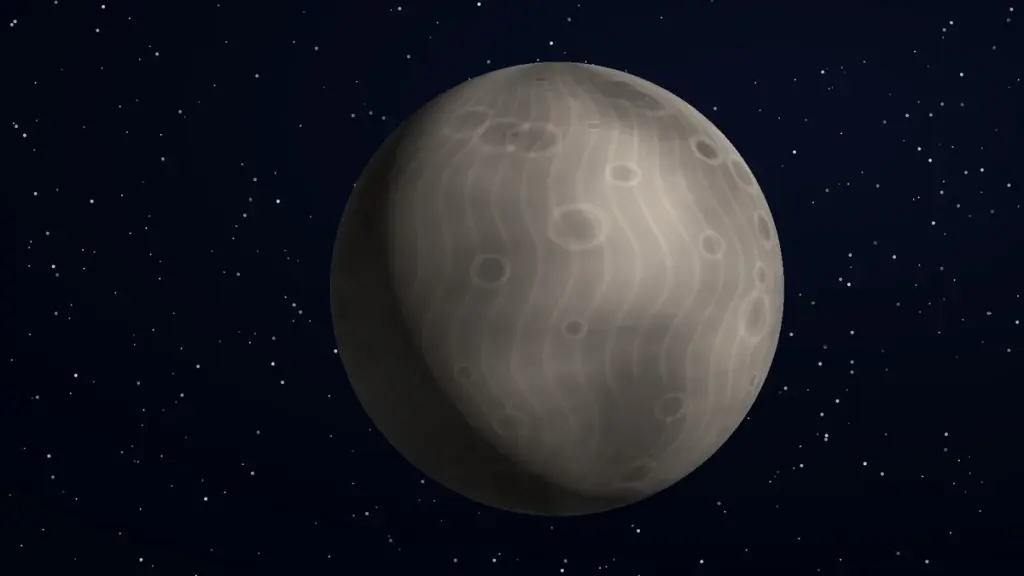
Ganymede is Jupiter’s largest moon and the largest natural satellite in the Solar System. It is bigger than Mercury, has an internally generated magnetic field, and contains extensive deposits of water ice. Scientific evidence also indicates that a vast saltwater ocean may exist beneath its frozen surface, making Ganymede an important target in the search for potentially habitable worlds.
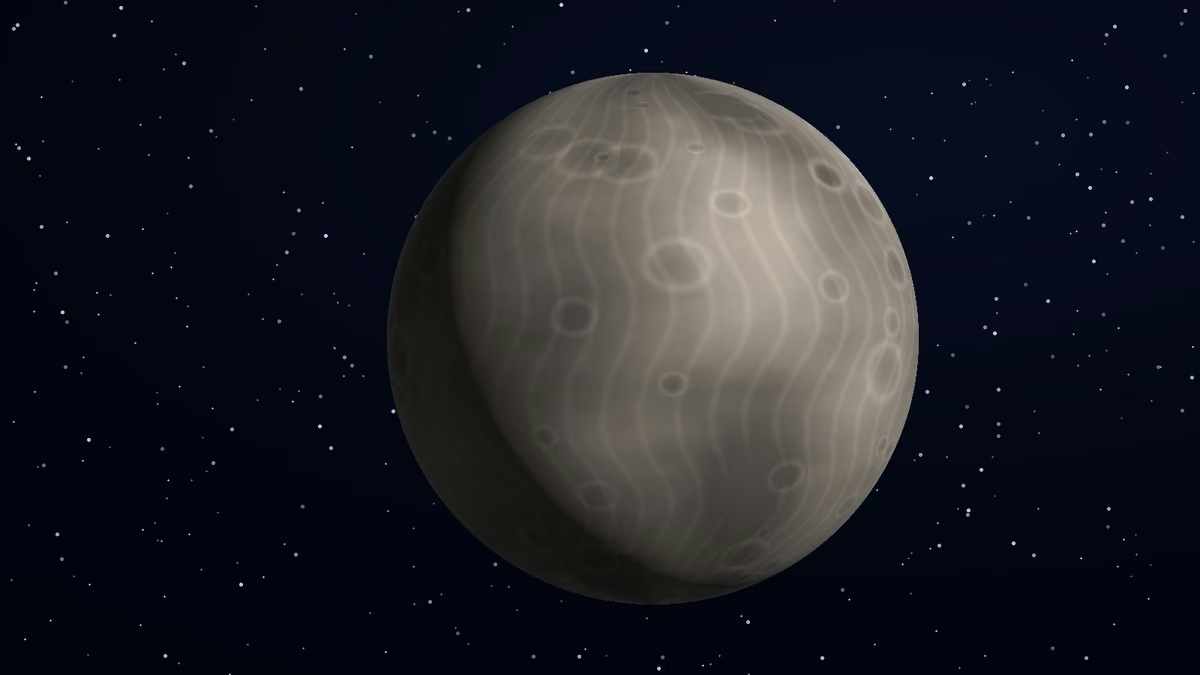
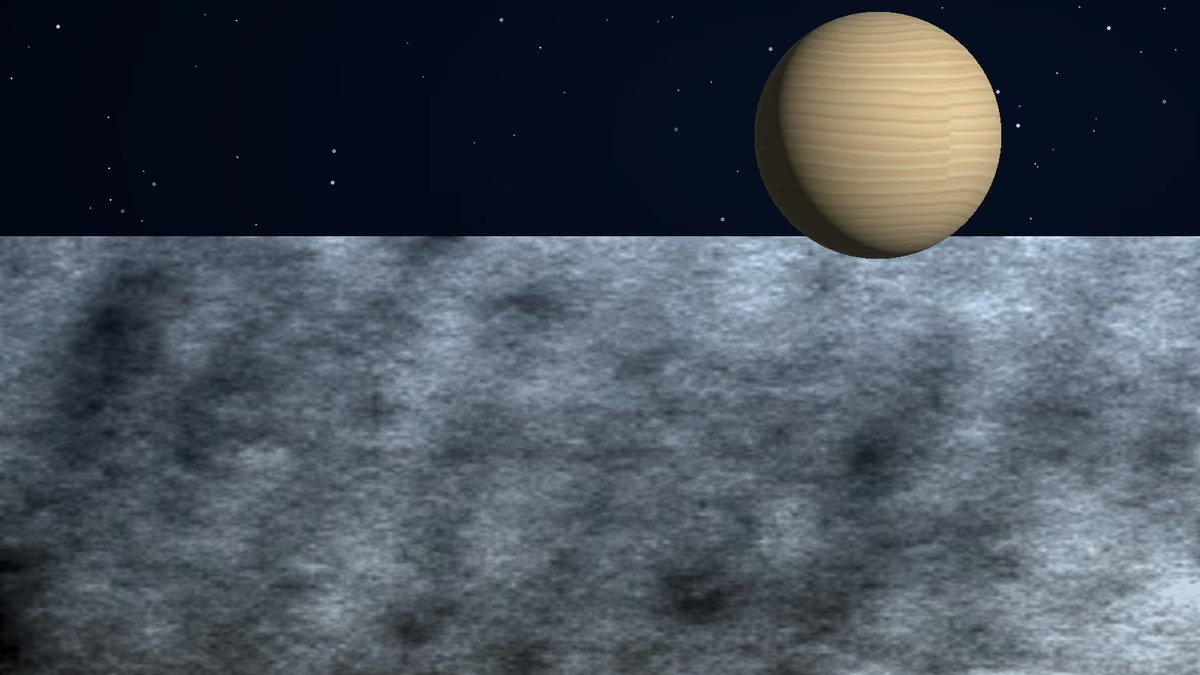
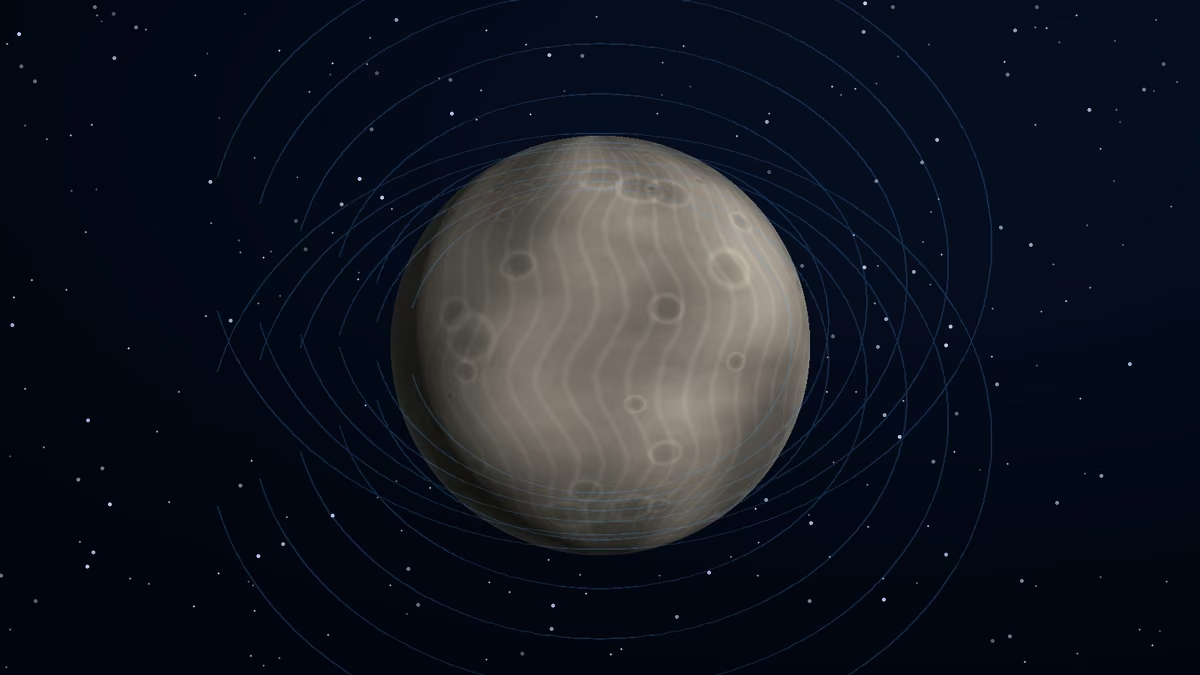
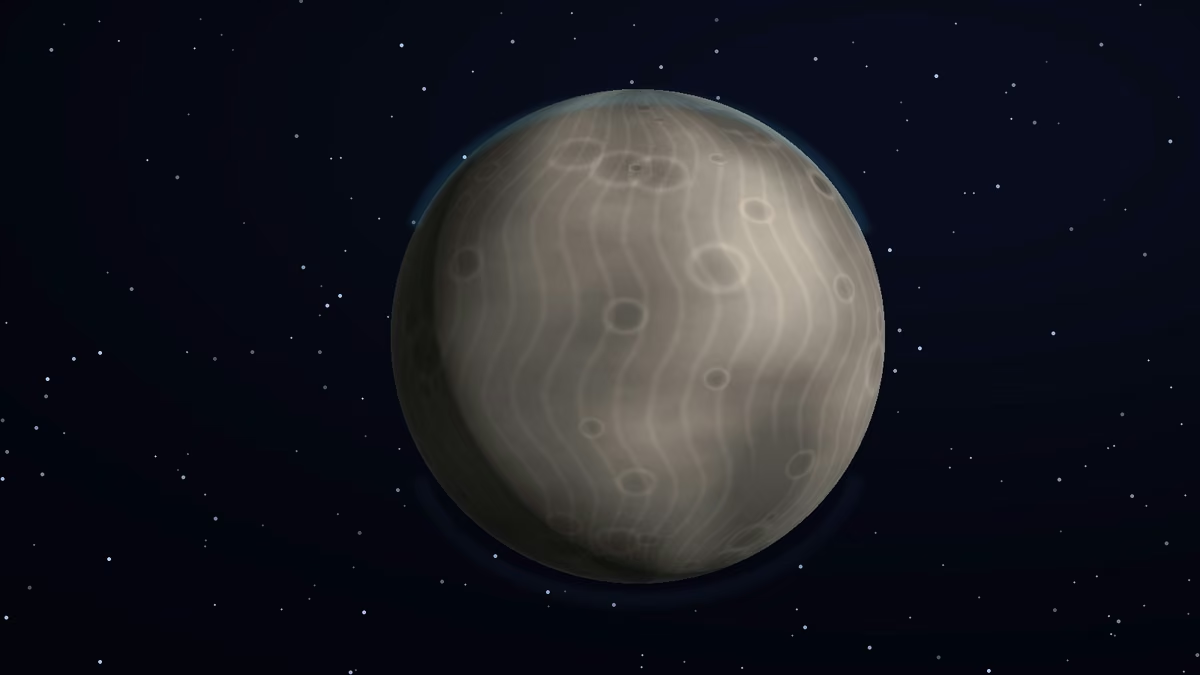
Illustration note: The non-infographic visuals in this article are original scientific artist concepts, not spacecraft photographs. Hidden-ocean scenes and internal layers are hypothetical.
At first glance, Ganymede appears to be another cold, crater-covered moon. However, its appearance conceals a surprisingly complex planetary environment involving ancient geological activity, an unusually structured interior, a magnetic field, and an extremely thin atmosphere.
Spacecraft observations have transformed scientists’ understanding of this distant world. NASA’s Voyager missions revealed its complex icy landscape, the Galileo spacecraft discovered its intrinsic magnetic field, and the Hubble Space Telescope provided compelling evidence of a subsurface ocean. More recently, Juno identified mineral salts and possible organic compounds on its surface. [1] [4]
Ganymede is also the primary target of the European Space Agency’s Jupiter Icy Moons Explorer, commonly called JUICE. This mission is expected to investigate the moon’s ocean, interior, geology, and magnetic environment in unprecedented detail.
The following 50 interesting facts about Ganymede explore what scientists have discovered, what remains uncertain, and why this extraordinary moon matters to planetary science.
1. Ganymede’s Size, Location, and Physical Characteristics
Ganymede stands apart from most natural satellites because of its enormous size, complex composition, and relationship with Jupiter. Although it is classified as a moon, it possesses several features commonly associated with planets, including a differentiated interior and a magnetic field. Understanding its fundamental physical properties provides an essential foundation for exploring its geology, atmosphere, and hidden ocean.
Fact 1. Ganymede Is the Largest Moon in the Solar System
Ganymede is the largest known natural satellite in the Solar System, with a diameter of approximately 5,262 kilometers. It orbits Jupiter and is composed primarily of rocky material and water-rich layers, including extensive deposits of ice.
Despite its enormous dimensions, Ganymede is classified as a moon rather than a planet because it orbits another planet. Its size does not change its orbital classification.
Interestingly, Ganymede is also larger than Saturn’s Titan, which is the second-largest moon in the Solar System. Its combination of size, internal structure, and magnetic activity makes it particularly important to scientists studying the evolution of large icy satellites. [1]
Fact 2. Ganymede Is Larger Than the Planet Mercury
One of the most surprising facts about Ganymede is that it is physically larger than Mercury, the smallest planet in the Solar System.
Ganymede measures approximately 5,262 kilometers across, compared with Mercury’s diameter of about 4,879 kilometers. This makes Ganymede roughly 8% wider than Mercury.
However, Mercury has more than twice Ganymede’s mass because it contains a much larger proportion of dense metallic and rocky materials.
This illustrates an important astronomical distinction: diameter measures an object’s width, volume describes the space it occupies, mass measures its quantity of matter, and density relates mass to volume. [1] [2]
Fact 3. Ganymede Orbits Jupiter, the Solar System’s Largest Planet
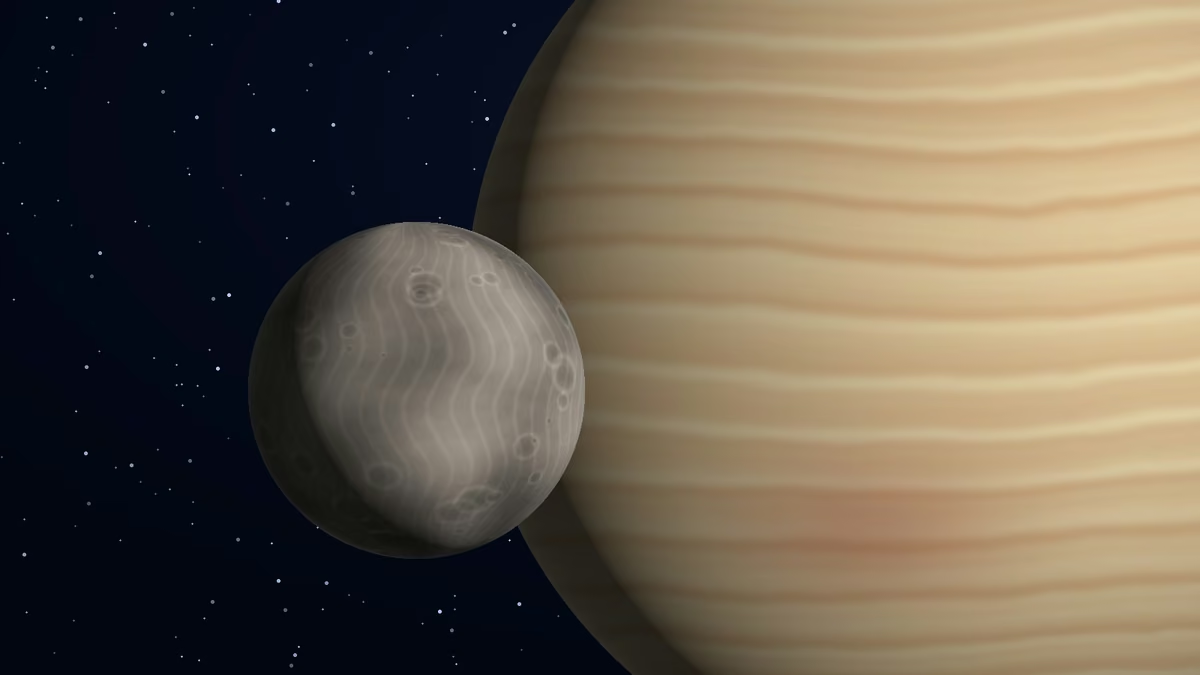
Ganymede travels around Jupiter, the largest and most massive planet in the Solar System. Jupiter’s powerful gravitational field controls the moon’s orbit and influences its long-term evolution.
Jupiter also possesses an enormous magnetosphere, a region dominated by its magnetic field and filled with energetic charged particles. Ganymede moves through this magnetic environment while generating a smaller magnetic field of its own.
The interaction between these two magnetic systems produces unusual plasma processes and auroral activity. Jupiter’s gravity also connects Ganymede dynamically with neighboring moons, particularly Io and Europa, through orbital resonance. [1] [3]
Fact 4. Ganymede Belongs to the Four Galilean Moons
Ganymede is one of Jupiter’s four Galilean moons, discovered through telescopic observations by Galileo Galilei in 1610. The other three are Io, Europa, and Callisto.
Each moon represents a remarkably different planetary environment.
- Io: A highly volcanic world with intense tidal heating.
- Europa: An icy moon with strong evidence of a global subsurface ocean.
- Ganymede: The largest moon, distinguished by its intrinsic magnetic field and complex interior.
- Callisto: An ancient, heavily cratered world with relatively limited geological resurfacing.
Studying these four moons together helps scientists understand how orbital position, internal composition, gravitational interactions, and thermal evolution produce different planetary landscapes. [4]
Fact 5. Ganymede Measures Approximately 5,262 Kilometers Across
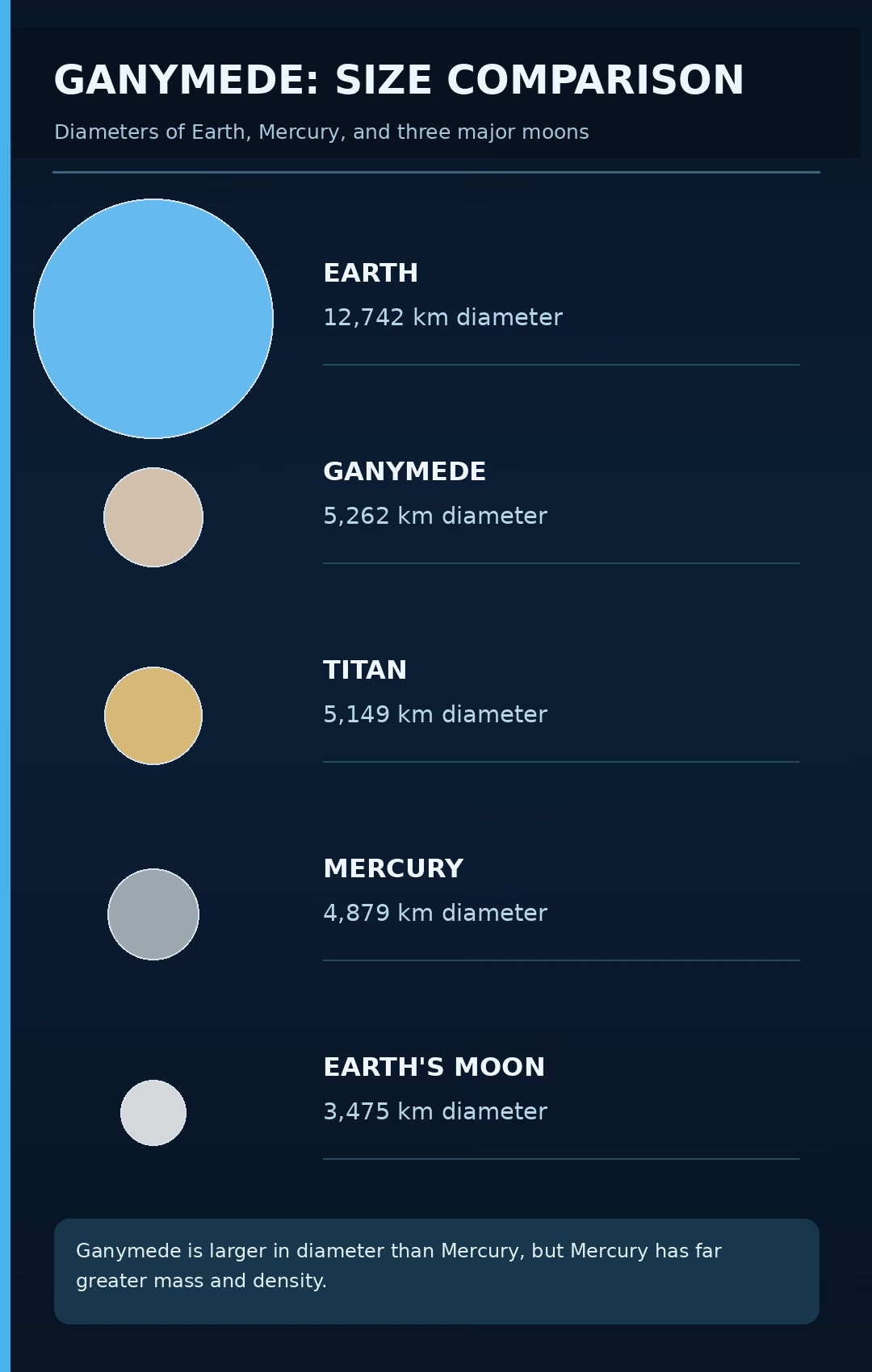
Ganymede’s mean diameter is approximately 5,262 kilometers, or 3,270 miles. Its radius is roughly 2,631 kilometers, making it substantially larger than Earth’s Moon and slightly larger than Saturn’s Titan.
The following comparison helps illustrate its extraordinary size.
| Celestial body | Approximate diameter |
|---|---|
| Earth | 12,742 km |
| Ganymede | 5,262 km |
| Titan | 5,149 km |
| Mercury | 4,879 km |
| Earth’s Moon | 3,475 km |
Astronomers determine the dimensions of distant moons through spacecraft imaging, observations of their visible boundaries, and other geometric measurements. These results can be refined as increasingly precise spacecraft observations become available. [2] [4]
Fact 6. Ganymede Is About 1.07 Million Kilometers From Jupiter
Ganymede orbits approximately 1,070,400 kilometers from Jupiter’s center. This measurement represents its orbital semi-major axis, which is close to its average orbital distance because Ganymede follows a nearly circular path.
Among the four Galilean moons, Ganymede occupies the third orbit outward from Jupiter.
Io travels approximately 421,800 kilometers from Jupiter’s center, Europa about 671,100 kilometers, and Callisto around 1,882,700 kilometers.
These different orbital distances influence each moon’s orbital period, gravitational interactions, and exposure to Jupiter’s magnetic environment. Ganymede’s orbital position is especially important because of its resonance with Europa and Io. [3]
Fact 7. Gravity on Ganymede Is Much Weaker Than on Earth
Ganymede’s surface gravitational acceleration is approximately 1.43 meters per second squared, compared with Earth’s 9.81 meters per second squared.
Consequently, an object would weigh only about 14.6% as much on Ganymede as it does on Earth.
For example, an object weighing 100 newtons on Earth would weigh approximately 14.6 newtons on Ganymede, although its mass would remain unchanged.
This low gravity would significantly influence human movement, equipment operation, and the behavior of loose surface materials during hypothetical future exploration. However, low gravity alone would not make Ganymede suitable for unprotected human activity. [2]
Fact 8. Ganymede Is Much Less Dense Than Earth
Ganymede has an average density of approximately 1.94 grams per cubic centimeter. Earth’s average density is about 5.51 grams per cubic centimeter, while Mercury’s is approximately 5.43 grams per cubic centimeter.
Ganymede’s relatively low bulk density indicates that a significant proportion of its interior consists of water-rich material rather than dense rock and metal.
Scientists combine density measurements with gravity observations, magnetic data, and physical models to investigate its interior.
These measurements support a structure containing a metallic core, a rocky mantle, and extensive outer layers composed of water ice and potentially liquid water. [1] [2]
Fact 9. Ganymede’s Surface Is Extremely Cold
Ganymede experiences extremely low surface temperatures because it receives far less solar energy than Earth and lacks a substantial atmosphere capable of retaining heat.
NASA reports daytime surface temperatures ranging approximately from 90 to 160 kelvin, equivalent to about minus 183°C to minus 113°C. Actual temperatures vary with location, illumination, and time.
Under these conditions, surface water remains frozen, helping preserve Ganymede’s widespread icy landscape.
However, the extremely cold surface does not mean the entire moon is frozen. Internal heat, pressure, and dissolved salts may allow liquid water to persist deep beneath the ice. [1]
2. How Ganymede Orbits Jupiter and Rotates
Ganymede’s movement around Jupiter is closely connected to the motions of neighboring moons. Its orbital period, rotation, and gravitational interactions reveal how satellites evolve within a large planetary system. Three especially important concepts explain its behavior: orbital period, tidal locking, and the Laplace resonance. These mechanisms also help scientists reconstruct Ganymede’s thermal and geological history.
Fact 10. Ganymede Takes Just Over Seven Earth Days to Orbit Jupiter
Ganymede completes one revolution around Jupiter in approximately 7.155 Earth days, equivalent to about 171.7 hours.
This interval is known as its orbital period. It represents the time required for the moon to complete an orbit relative to a nearly fixed reference direction in space.
Ganymede’s orbital period is considerably longer than Io’s approximately 1.77 days and Europa’s approximately 3.55 days, but shorter than Callisto’s approximately 16.69 days.
These differences largely reflect their orbital distances and Jupiter’s gravity. More distant moons generally require longer periods to complete their orbits. [3]
Fact 11. The Same Side of Ganymede Almost Always Faces Jupiter
Ganymede is tidally locked to Jupiter, meaning its rotation period matches its orbital period of approximately 7.15 Earth days.
As a result, essentially the same hemisphere continuously faces Jupiter, much like the same side of Earth’s Moon faces our planet.
This configuration develops because gravitational tidal forces gradually alter a satellite’s rotation until it becomes synchronized with its orbit.
Scientists distinguish Ganymede’s Jupiter-facing hemisphere from its opposite hemisphere. They also describe leading and trailing hemispheres according to the direction of orbital motion. These orientations help researchers study variations in surface composition and radiation exposure. [1]
Fact 12. Ganymede Participates in a Remarkable Orbital Resonance
Ganymede, Europa, and Io participate in a gravitational relationship called the Laplace resonance.
Their orbital periods follow an approximate 1:2:4 frequency relationship. For every orbit Ganymede completes around Jupiter, Europa completes about two and Io approximately four.
This synchronization creates repeated gravitational interactions that help maintain small orbital eccentricities instead of allowing the moons’ paths to become perfectly circular.
Orbital eccentricity is important because changing gravitational forces can deform a moon’s interior and produce tidal heating. The resonance is particularly important to Io’s volcanism and Europa’s thermal evolution, and it also influences models of Ganymede’s past. [1] [3]
3. How Ganymede Formed and What Lies Inside It
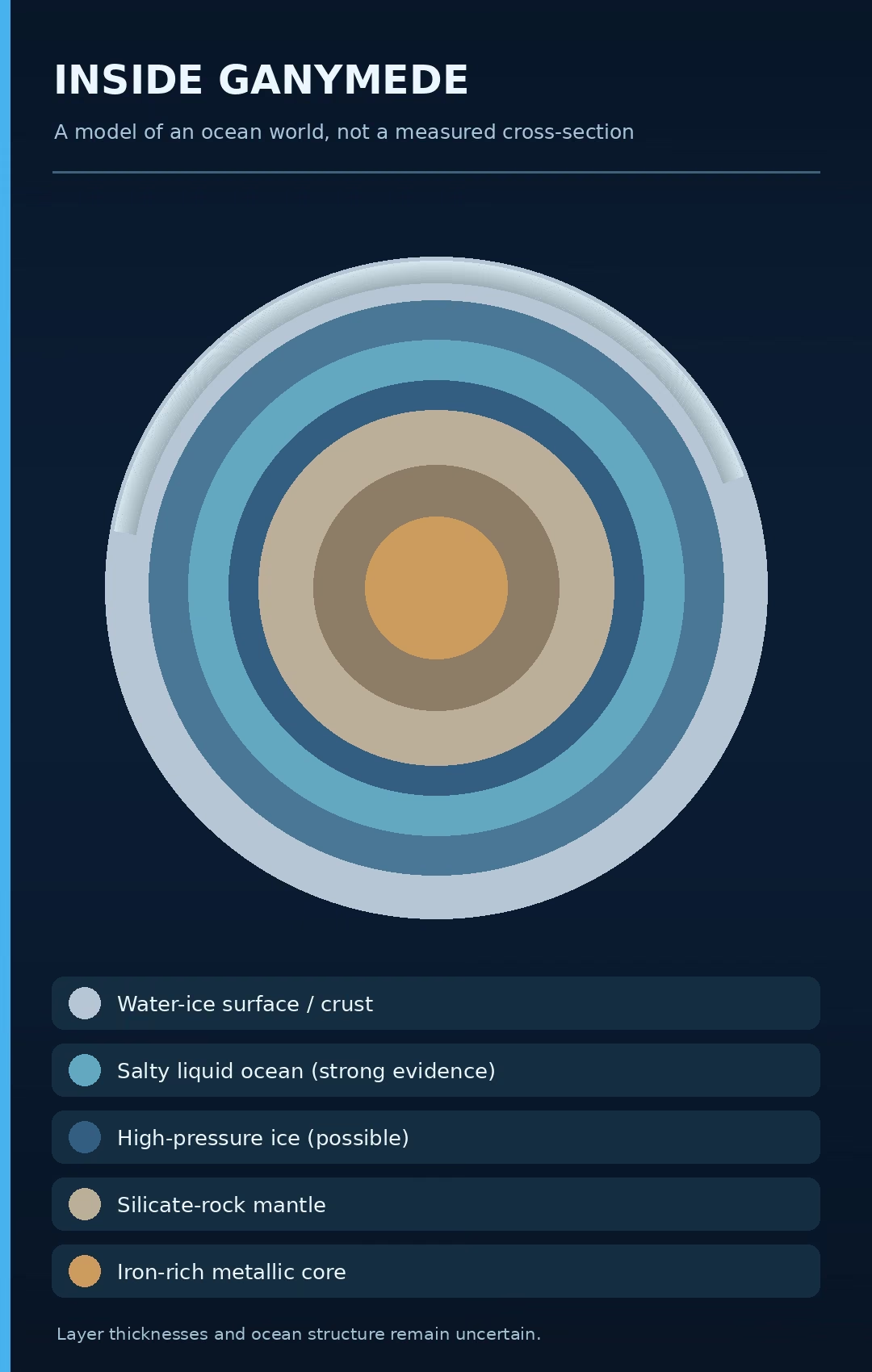
Although spacecraft can photograph Ganymede’s surface, its deep interior cannot be directly observed. Scientists investigate its internal structure using gravitational measurements, magnetic-field observations, surface geology, and thermodynamic models. These methods indicate that Ganymede is a differentiated world with several distinct layers, including an iron-rich central region, rocky mantle, and extensive water-rich outer structure.
Fact 13. Ganymede Formed Billions of Years Ago
Scientists estimate that Ganymede formed approximately 4.5 billion years ago, during the early history of the Solar System.
The leading formation scenario involves the accumulation of material within a circumplanetary disk of gas, dust, and solid particles surrounding the young Jupiter.
Through accretion, smaller particles and bodies gradually combined into a large satellite containing ice, silicate rock, and metallic material.
Collisions, gravitational compression, radioactive decay, and other early heat sources helped influence its internal development. The exact conditions of Ganymede’s formation remain subjects of research, particularly how its composition and thermal history compare with those of Europa and Callisto. [1]
Fact 14. Ganymede Has a Layered Interior
Unlike a completely uniform mixture of ice and rock, Ganymede possesses a differentiated interior.
Planetary differentiation occurs when materials separate according to their physical and chemical properties, often because the interior becomes sufficiently warm for dense materials to move inward.
Models of Ganymede indicate three broad structural regions: a metallic core, a surrounding rocky mantle, and outer layers dominated by water and ice.
These divisions are supported by measurements of the moon’s gravity field, overall density, and magnetic properties.
However, the detailed thickness, temperature, and composition of individual layers are not completely established. [1] [2]
Fact 15. A Rocky Mantle Surrounds Ganymede’s Core
Beneath Ganymede’s water-rich outer structure lies a substantial mantle composed primarily of silicate rock.
This rocky region surrounds the central metallic core and accounts for a significant fraction of the moon’s internal mass.
The mantle matters because rocky minerals can influence thermal evolution and potentially participate in chemical reactions involving liquid water.
Scientists are particularly interested in whether Ganymede’s deep ocean can interact with rocky material. Such interactions could introduce dissolved minerals and support chemical energy gradients.
However, the existence and extent of direct ocean-rock contact depend on the actual arrangement of deep liquid-water and high-pressure ice layers. [1] [6]
Fact 16. Ganymede May Contain a Liquid Metallic Core
Ganymede is believed to possess an iron-rich metallic core, potentially containing lighter elements such as sulfur.
At least part of this central region is thought to remain liquid or otherwise capable of supporting the electrically conductive motion needed to generate its observed magnetic field.
A liquid metallic region is scientifically important because moving conductive fluids can create electrical currents and sustain a planetary magnetic dynamo.
However, the exact core radius, chemical composition, proportion of liquid material, and internal temperature remain uncertain.
These questions are central to understanding how Ganymede maintains a magnetic field billions of years after its formation. [1]
Fact 17. Ganymede Has an Internal Magnetic Dynamo
Ganymede’s intrinsic magnetic field is widely interpreted as evidence of a functioning internal dynamo.
A magnetic dynamo operates when electrically conductive material moves in ways that generate and maintain magnetic fields. Earth’s magnetic field is produced through a related process involving liquid metal in its outer core.
For Ganymede, the leading explanation involves fluid motion within an iron-rich metallic core.
The remarkable question is how such a distant, relatively small world has retained enough internal energy to sustain this process.
Scientists continue investigating the roles of core composition, heat transfer, convection, and the moon’s long-term thermal evolution. [1] [15]
4. Ganymede May Hide a Vast Ocean Beneath Its Ice
One of Ganymede’s most scientifically important characteristics is the strong evidence for liquid water deep beneath its surface. Unlike Earth’s oceans, which are exposed to the atmosphere, Ganymede’s possible ocean is concealed beneath an enormous ice shell. Understanding its depth, salinity, internal structure, and chemical environment could reveal whether large icy moons can maintain potentially habitable conditions over geological timescales.
Fact 18. Ganymede Has Strong Evidence of a Subsurface Saltwater Ocean
Scientists have compelling indirect evidence that Ganymede contains a global subsurface ocean of salty liquid water.
The strongest observations involve its magnetic environment. Jupiter’s changing magnetic field produces electrical effects inside conductive materials. A salty ocean could generate induced magnetic fields that influence Ganymede’s observable auroral behavior.
In 2015, researchers using the Hubble Space Telescope showed that Ganymede’s auroral belts moved less than expected without an electrically conductive interior layer.
Their findings provided powerful support for a subsurface saltwater ocean, although no spacecraft has directly sampled the suspected liquid water. [5]

Fact 19. Ganymede’s Ocean May Hold More Water Than Earth’s Surface Oceans
Models suggest that Ganymede’s buried ocean may contain more liquid water than all of Earth’s surface oceans combined.
NASA describes a representative ocean model approximately 100 kilometers thick, which is around ten times the average depth of Earth’s oceans.
Because Ganymede is enormous, even a relatively thin global liquid layer could contain an extraordinary volume of water.
However, the actual ocean thickness and volume remain uncertain. Some interior models suggest a much more complicated structure with several liquid and solid layers.
These estimates are derived from physical modeling and indirect measurements rather than direct observations of the ocean’s boundaries. [1] [6]
Fact 20. A Thick Icy Crust Covers the Hidden Ocean
Ganymede’s outer surface consists largely of water ice mixed with darker materials.
Some models suggest its upper ocean may lie beneath approximately 150 kilometers of predominantly icy material. This immense frozen shell separates the extremely cold surface from any underlying liquid-water reservoir.
The shell’s thickness, temperature, and physical properties help determine whether materials can move between the surface and deeper interior.
For example, fractures, thermal convection, and localized melting could influence the redistribution of substances within the ice.
Nevertheless, there is no confirmed open passage connecting Ganymede’s surface directly to its deep ocean. [1]
Fact 21. Ganymede May Have Multiple Layers of Ice and Water
Ganymede’s hidden ocean may not be a single uninterrupted body of liquid water.
Under immense pressure, water ice can form crystalline structures that differ from ordinary surface ice. These high-pressure phases include ice III, ice V, and ice VI under suitable conditions.
NASA-supported research published in 2014 suggested that Ganymede might contain alternating layers of salty water and high-pressure ice.
The precise arrangement depends on temperature, pressure, salinity, and internal heat.
Such a layered structure could strongly affect thermal transport, the circulation of dissolved substances, and the possibility of chemical communication between the ocean and rocky interior. [6]
Fact 22. Ganymede’s Ocean May Interact With Its Rocky Interior
One of the most important unanswered questions about Ganymede is whether liquid water reaches its rocky mantle.
On Earth, water-rock reactions can release dissolved minerals and generate chemical energy used by microorganisms in some environments.
Researchers have therefore investigated whether comparable reactions could occur within Ganymede.
Early interior models often placed dense high-pressure ice between the deep ocean and rocky seafloor. Later models showed that sufficiently salty liquid water might exist beneath some of those ice layers and contact the rock directly.
Neither configuration has been conclusively established, making ocean-rock interaction a major target of future investigation. [6]
Fact 23. Scientists Are Investigating Whether Ganymede Could Support Life
Ganymede is considered a potentially habitable ocean world, but its habitability has not been demonstrated.
For life as we understand it, scientists generally investigate the availability of liquid water, biologically useful chemical elements, accessible energy sources, and conditions stable enough for relevant chemistry to occur.
Ganymede may possess some of these ingredients, particularly liquid water and rocky materials.
However, its deep ocean could be isolated by high-pressure ice, and the availability of usable chemical energy remains uncertain.
Europa and Saturn’s moon Enceladus are also major astrobiological targets because of evidence relating to their oceans and potentially active water-rock chemistry.
No life has been discovered on Ganymede, and there is currently no direct evidence that living organisms exist there. [1] [6]
5. Ganymede Is the Only Known Moon With Its Own Magnetic Field
Ganymede’s magnetic field is one of its most remarkable characteristics. Most moons do not possess an independently generated global magnetic field comparable to that of a planet. Ganymede, however, supports a magnetic environment within Jupiter’s much larger magnetosphere. Understanding this unusual arrangement provides important information about its metallic core, charged-particle environment, atmospheric emissions, and possible subsurface ocean.
Fact 24. Ganymede Generates Its Own Magnetic Field
Ganymede is the only known moon in the Solar System with a confirmed internally generated global magnetic field.
NASA’s Galileo spacecraft discovered this extraordinary property during its encounters with Ganymede in 1996.
The detection indicated that the moon’s interior was more complex than scientists could determine from surface observations alone.
Unlike an induced magnetic response produced solely by an external field, Ganymede’s intrinsic field is thought to originate from electrically conducting motion within its metallic core.
This discovery changed scientific understanding of icy satellites by demonstrating that a moon could sustain a planetary-style magnetic dynamo. [1] [4]
Fact 25. Ganymede Has Its Own Magnetosphere
Ganymede possesses a magnetosphere, a region in which magnetic forces strongly influence the behavior of charged particles.
What makes this magnetosphere unusual is its location inside Jupiter’s much larger magnetic environment.
The two magnetic systems interact, producing complex magnetic boundaries, particle movements, and pathways through which energetic plasma can approach Ganymede.
Ganymede’s magnetic field partially shields some regions of its surface from charged-particle bombardment, particularly at lower latitudes.
However, it does not create complete protection. Charged particles can still reach important areas, especially near the magnetic poles, contributing to surface alteration and atmospheric processes. [1] [10]
Fact 26. Ganymede Produces Auroras Near Its Poles
Ganymede produces auroral emissions associated with interactions between charged particles, its magnetic field, and its extremely thin atmosphere.
The Hubble Space Telescope has observed ultraviolet auroral belts in regions surrounding the moon’s northern and southern magnetic poles.
These emissions are especially valuable because their positions change in response to Jupiter’s magnetic field.
In 2015, scientists used the limited movement of Ganymede’s auroral belts to infer the presence of an electrically conductive ocean beneath the surface.
Unlike the colorful auroras commonly photographed on Earth, Ganymede’s observed auroral emissions are primarily investigated using ultraviolet-sensitive instruments. [5]
6. Ganymede Has a Thin Atmosphere and Frosty Polar Regions
Although Ganymede cannot retain a thick atmosphere like Earth’s, it possesses an extremely tenuous layer of gas around its surface. Scientists call this type of environment an exosphere. Its composition and behavior are influenced by energetic charged particles, solar heating, and interactions with surface ice. Ganymede’s magnetic field also creates important differences between its polar and equatorial regions.
Fact 27. Ganymede Has a Very Thin Oxygen Atmosphere
Ganymede possesses an extremely thin oxygen-containing atmosphere, more accurately described as an exosphere.
Molecular oxygen is one of its identified constituents. Scientists believe that energetic particles and radiation interact with surface water ice, releasing molecules and atoms into the surrounding environment.
This process, known as sputtering, contributes to Ganymede’s atmospheric composition.
However, the oxygen concentration and total atmospheric pressure are far too low to support human breathing.
Research using the James Webb Space Telescope, published in 2024, also identified a patchy carbon dioxide exosphere, demonstrating that Ganymede’s atmospheric chemistry is more varied than earlier observations could establish. [1] [17]
Fact 28. Scientists Have Detected Water Vapor Around Ganymede
In July 2021, scientists announced evidence of water vapor in Ganymede’s atmosphere using observations from the Hubble Space Telescope.
The research indicated that water vapor forms primarily through sublimation, a process in which solid ice changes directly into gas without passing through the liquid phase.
This mechanism becomes more significant where sunlight warms the surface sufficiently to release water molecules.
Water vapor is therefore more abundant in certain warmer regions than in colder areas.
Importantly, this detection does not establish that water vapor is escaping from Ganymede’s deep ocean. No active ocean-fed plume system has been conclusively confirmed. [7]
Fact 29. Ganymede’s Polar Regions Contain Distinctive Frost Deposits
Ganymede’s polar regions display unusual icy characteristics that distinguish them from many equatorial areas.
Observations from Voyager, Galileo, and Juno indicate that high-latitude regions contain abundant water ice with distinctive physical properties.
Juno’s infrared measurements revealed fine-grained ice in polar regions, consistent with intense bombardment by charged particles from Jupiter’s magnetosphere.
These particles can alter surface ice through sputtering and other radiation-driven processes.
Meanwhile, lower latitudes receive greater magnetic shielding and can preserve more non-water-ice constituents.
These differences help researchers understand how Ganymede’s magnetic environment influences its surface appearance and composition. [10]

7. Ganymede’s Surface Reveals Billions of Years of Geological History
Ganymede’s icy surface preserves an extensive record of impacts, crustal deformation, and geological changes. Unlike Earth’s surface, which is continually reshaped by widespread erosion and plate tectonics, much of Ganymede’s ancient terrain remains visible. By studying its craters, grooves, ridges, and named geological regions, planetary scientists can reconstruct different stages of its thermal and structural evolution.
Fact 30. Ganymede Has Two Major Types of Surface Terrain
Ganymede’s surface is broadly divided into dark cratered terrain and brighter grooved terrain.
According to NASA, approximately 40% of the surface consists of darker, heavily cratered regions, while the remaining 60% is dominated by lighter terrain containing extensive grooves and ridges.
These two terrain types indicate that Ganymede experienced different geological processes during its history.
The dark regions generally preserve older landscapes, while many bright regions underwent significant tectonic deformation and resurfacing.
Their distribution provides evidence that Ganymede’s icy crust changed substantially after the moon originally formed. [1] [9]
Fact 31. Some of Ganymede’s Dark Terrain Is Extremely Ancient
Ganymede’s dark terrain contains numerous impact craters, suggesting that large portions of it have survived for billions of years.
Scientists estimate relative surface ages by examining crater density. Regions with more overlapping craters generally experienced less subsequent resurfacing than areas containing fewer craters.
The dark coloration is associated with mixtures of ice and non-ice materials, although the precise composition and alteration history vary across locations.
Galileo Regio is a prominent example of this ancient terrain.
Studying these regions helps planetary geologists investigate early impact activity and the processes that modified Ganymede’s original icy surface. [9]

Fact 32. Ganymede Has Bright Terrain Covered With Long Grooves
One of Ganymede’s most recognizable geological features is its bright grooved terrain, which contains extensive networks of ridges, troughs, fractures, and elongated bands.
Some grooves extend across enormous distances, and NASA reports that certain ridges rise hundreds of meters above nearby terrain.
These structures are generally younger than the heavily cratered dark regions surrounding them.
Scientists interpret many of the grooves as evidence of extension and deformation within Ganymede’s icy crust.
The patterns reveal that ice can behave as a mechanically complex geological material, developing features comparable in some respects to faults and tectonic structures on rocky planets. [1] [9]
Fact 33. Ganymede’s Icy Crust Shows Evidence of Tectonic Activity
Ganymede’s surface preserves strong evidence of past tectonic deformation, including faults, fractures, ridges, and extensive zones of crustal stretching.
On icy worlds, tectonic activity involves the deformation and movement of solid ice rather than necessarily involving Earth’s style of rocky plate tectonics.
Possible causes include internal heating, changes in the moon’s volume, and stresses associated with gravitational interactions.
Geological mapping indicates that Ganymede experienced a major period of tectonic restructuring during its history.
However, the presence of ancient faults does not demonstrate that comparable large-scale tectonic activity is occurring today. [9]
Fact 34. Countless Impact Craters Cover Ganymede
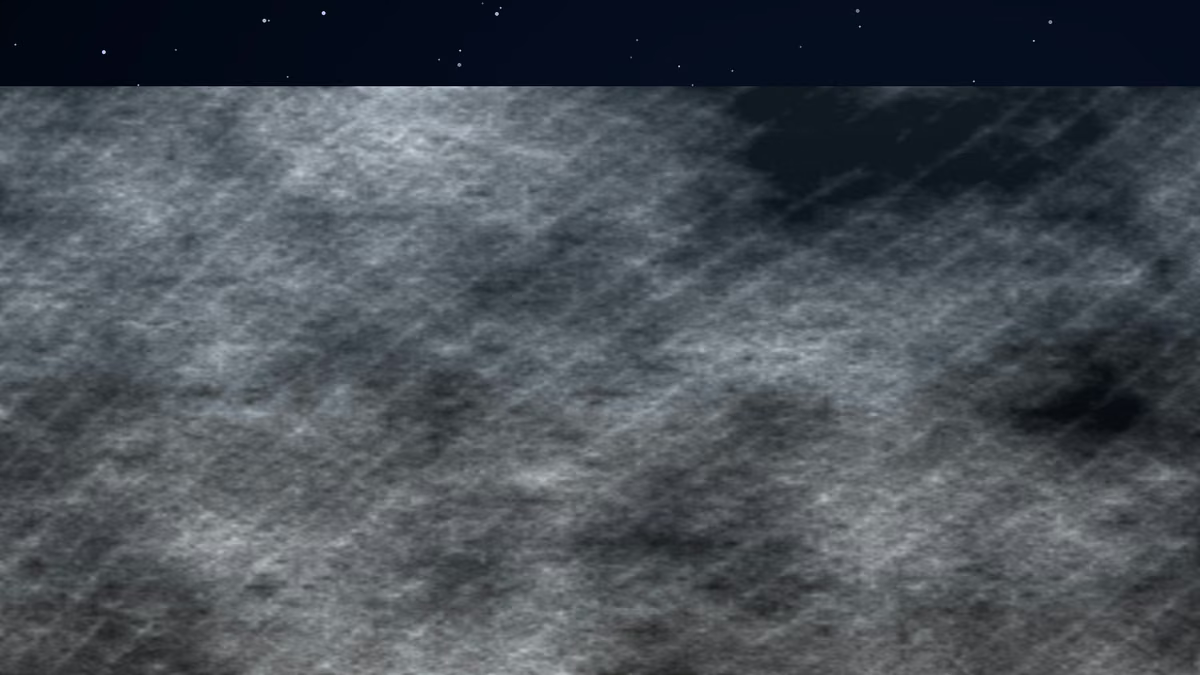
Ganymede’s surface contains impact craters formed when asteroids, comets, and other objects collided with its icy crust.
The moon preserves craters of different sizes and ages, particularly within its older dark terrain.
Large impacts can excavate subsurface materials, fracture surrounding ice, and deposit debris over wide areas.
By comparing crater populations across geological units, scientists determine relative ages and reconstruct portions of the Solar System’s impact history.
Crater counting does not automatically provide an exact absolute age, however. Researchers must also consider assumptions about historical impact rates and the extent of subsequent geological modification. [9]
Fact 35. Some Ancient Craters Have Become Almost Flat
Some ancient impact structures on Ganymede are unusually shallow or nearly flattened.
These formations are known as palimpsests, a term used in planetary geology for subdued impact features that retain evidence of their original circular structures.
Palimpsests may develop when impact basins undergo long-term relaxation or other modification within an icy crust.
Their low topographic relief contrasts with the pronounced rims and central structures of better-preserved craters.
NASA’s Galileo spacecraft photographed palimpsests, helping scientists investigate how the strength and temperature of Ganymede’s ice may have changed through geological time. [11]
Fact 36. Some Impact Craters Have Distinctive Ejecta Rays
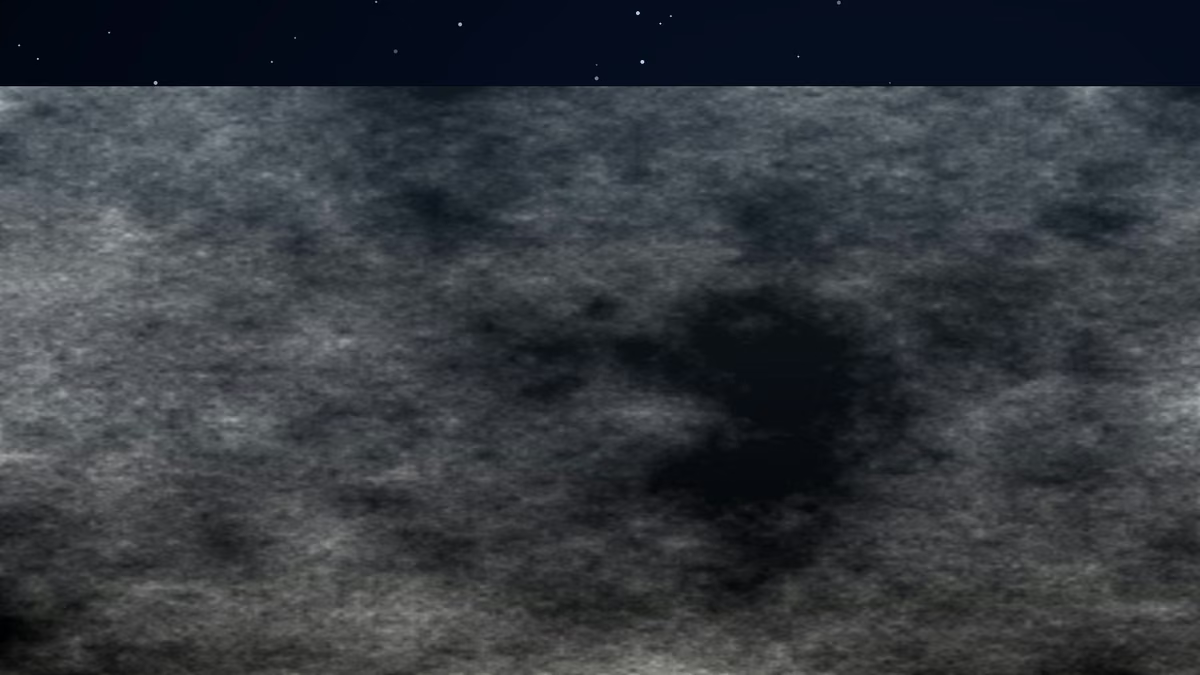
Certain impact craters on Ganymede are surrounded by bright or dark streaks extending outward from their centers.
These features are called ejecta rays and form when impacts throw excavated material across the surrounding landscape.
Their appearance depends on the composition of the ejected material, the underlying surface, and subsequent alteration.
A particularly interesting example is Kittu, a crater approximately 15 kilometers across, surrounded by dark ejecta rays.
NASA reports that dark-rayed craters are relatively uncommon on Ganymede. Studying them helps scientists understand differences between impact debris, surface contamination, and the redistribution of ice. [13]
Fact 37. Galileo Regio Is One of Ganymede’s Most Famous Dark Regions
Galileo Regio is a large region of ancient, dark terrain on Ganymede.
Its surface contains numerous impact craters and geological structures that preserve evidence of the moon’s early history.
Unlike the brighter, extensively deformed grooved regions, Galileo Regio retains substantial areas of older cratered material.
Scientists use imagery and geological mapping to investigate the relationships between craters, fractures, and different surface units within the region.
These observations help reconstruct the sequence of events that shaped Ganymede before and during its major period of tectonic restructuring. [9]
Fact 38. Uruk Sulcus Contains Remarkable Icy Ridges and Grooves
Uruk Sulcus is one of Ganymede’s best-studied examples of bright grooved terrain.
High-resolution images captured by the Galileo spacecraft reveal parallel ridges, troughs, relatively smooth areas, and impact craters.
Some patterns indicate that Ganymede’s icy crust experienced extension, meaning it was pulled apart. Other features suggest horizontal shearing between adjacent sections of ice.
Galileo observations resolved surface details on scales much smaller than earlier Voyager imagery.
These images allow researchers to investigate the sequence of deformation events and understand how stress transformed portions of Ganymede’s ancient crust. [12]
8. Spacecraft Have Detected Salts and Organic Compounds on Ganymede
Ganymede’s surface is chemically more complex than a simple layer of frozen water. Spectroscopic observations have revealed evidence of mineral salts and carbon-containing compounds. These discoveries are important because surface chemistry may preserve information about the moon’s formation, radiation environment, and possible exchanges involving water-rich materials. However, identifying substances at the surface does not automatically establish their origin within the deep ocean.
Fact 39. Mineral Salts Exist on Ganymede’s Surface
NASA’s Juno mission identified spectral evidence of several mineral salts on Ganymede’s icy surface.
The substances reported in the 2023 analysis include hydrated sodium chloride, ammonium chloride, and sodium bicarbonate.
These chemical identifications are important because salts can provide information about the conditions under which Ganymede formed and the processes that have modified its surface.
For example, ammonium-bearing salts may indicate the incorporation of relatively volatile materials during the moon’s early history.
However, the detection of salts does not prove that they originated directly from the present subsurface ocean. Their exact sources and transport histories remain under investigation. [8]
Fact 40. Organic Compounds Have Been Detected on Ganymede
Juno’s infrared observations have provided evidence of carbon-containing compounds on Ganymede’s surface.
Researchers reported possible aliphatic aldehydes, a class of organic compounds containing carbon, hydrogen, and oxygen.
The identification of these particular molecules remains tentative because infrared spectral features can sometimes be compatible with more than one chemical interpretation.
Organic compounds are scientifically significant because carbon chemistry is essential to life on Earth.
Nevertheless, organic molecules can also form through entirely nonbiological processes, including chemical reactions driven by radiation.
Therefore, these observations do not establish biological activity, living organisms, or even the presence of all chemical ingredients necessary for life. [8]
Fact 41. Juno’s JIRAM Instrument Helped Reveal Ganymede’s Chemistry
The Jovian InfraRed Auroral Mapper, or JIRAM, is an infrared instrument aboard NASA’s Juno spacecraft.
Although it was originally designed to investigate Jupiter’s atmosphere and auroral environment, JIRAM has also proved valuable for examining the planet’s moons.
During Juno’s June 7, 2021, encounter with Ganymede, JIRAM collected infrared observations that revealed spectral features associated with non-water-ice materials.
The resulting analysis achieved spatial resolution better than approximately one kilometer per pixel.
Research published in Nature Astronomy on October 30, 2023, reported evidence of salts and possible organic compounds, demonstrating the value of infrared spectroscopy for planetary surface investigations. [8]

9. Space Missions Have Transformed Our Understanding of Ganymede
More than four centuries of observations have transformed Ganymede from a tiny point of light into a complex world with a mapped surface, magnetic field, atmosphere, and strongly inferred underground ocean. Early telescopes established its existence, while spacecraft and space-based observatories revealed its physical properties. Future exploration will attempt to resolve questions that previous missions could investigate only indirectly.
Fact 42. Galileo Galilei Discovered Ganymede in 1610
Italian astronomer Galileo Galilei is credited with discovering Ganymede on January 7, 1610, during his pioneering telescopic observations of Jupiter.
Initially, Galileo interpreted the small points of light near Jupiter as distant stars. Continued observations demonstrated that they changed position relative to the planet in a way consistent with orbiting satellites.
This discovery provided important evidence against the idea that every celestial body must orbit Earth.
German astronomer Simon Marius also made observations of Jupiter’s moons around the same period and later proposed the names used today.
Galileo’s observations were published in Sidereus Nuncius, or The Starry Messenger, in March 1610. [4]
Fact 43. Pioneer 10 Provided Early Spacecraft Observations of Ganymede
NASA’s Pioneer 10 spacecraft made its closest encounter with Jupiter on December 3, 1973.
The mission marked humanity’s first close spacecraft exploration of Jupiter and provided early images and measurements of the Jovian system.
Pioneer 10 obtained images of Ganymede, Europa, and Callisto, helping establish a foundation for later spacecraft investigations.
Although its imaging capabilities were limited compared with subsequent missions, Pioneer 10 demonstrated that spacecraft could successfully reach and investigate the outer planets.
Its observations also improved understanding of Jupiter’s intense radiation environment, information that became important for designing later missions such as Voyager and Galileo. [4]
Fact 44. Voyager 1 and Voyager 2 Revealed Ganymede’s Complex Surface
NASA’s Voyager 1 and Voyager 2 spacecraft explored Jupiter and its major moons during their 1979 encounters.
Their images revealed that Ganymede possessed a much more complicated surface than expected.
Scientists identified extensive regions of dark, heavily cratered terrain alongside brighter areas crossed by long grooves and ridges.
The observations suggested that Ganymede’s icy crust had experienced substantial geological deformation.
Voyager measurements also established that Ganymede was larger than Saturn’s Titan, resolving earlier uncertainty about which moon was the largest in the Solar System.
These discoveries motivated later high-resolution investigations of Ganymede’s geological history. [4]
Fact 45. The Galileo Spacecraft Discovered Ganymede’s Magnetic Field
NASA’s Galileo spacecraft arrived at Jupiter in December 1995 and conducted investigations of the Jovian system until September 2003.
During multiple encounters with Ganymede, Galileo collected images, magnetic measurements, and other scientific data.
Its detection of Ganymede’s internally generated magnetic field in 1996 was one of the mission’s most important discoveries.
The spacecraft also returned detailed images of icy ridges, craters, fractures, and other geological structures.
Galileo’s gravity and magnetic observations contributed to the development of models describing Ganymede’s differentiated interior and possible subsurface ocean. [1] [4]
Fact 46. The Hubble Space Telescope Revealed Evidence of Ganymede’s Hidden Ocean
The Hubble Space Telescope has made several important contributions to Ganymede research.
In 2015, scientists used Hubble’s ultraviolet observations of Ganymede’s auroral belts to investigate the moon’s magnetic response to Jupiter.
The limited movement of these auroral features provided strong evidence for an electrically conductive saltwater ocean below the icy crust.
In 2021, Hubble observations also revealed evidence of atmospheric water vapor produced through surface-ice sublimation.
These discoveries demonstrate that telescopes operating near Earth can investigate the internal structure and atmospheric behavior of distant moons without physically landing on them. [5] [7]
Fact 47. NASA’s Juno Spacecraft Captured New Views of Ganymede
NASA’s Juno spacecraft entered orbit around Jupiter in July 2016, primarily to investigate the giant planet’s atmosphere, gravitational structure, and magnetic environment.
During its extended scientific investigations, Juno also examined several Galilean moons.
Its cameras and infrared instruments provided new observations of Ganymede’s icy surface, including dark terrain, bright geological structures, and impact craters.
JIRAM observations also helped scientists compare polar and equatorial surface chemistry.
These measurements complemented earlier findings from Voyager and Galileo while providing new spectral information about mineral salts and possible organic materials. [8] [10]
Fact 48. Juno Flew Close to Ganymede on June 7, 2021
On June 7, 2021, NASA’s Juno spacecraft completed a close flyby of Ganymede, passing approximately 1,046 kilometers above its surface according to the subsequently reported encounter geometry.
This was the closest spacecraft encounter with Ganymede in more than two decades.
Juno collected images and infrared measurements of the moon’s complex terrain, including bright craters, ancient dark regions, and elongated geological structures.
The encounter offered an opportunity to study surface composition at improved spatial resolution.
Data from this flyby contributed directly to the research published in October 2023 identifying salts and possible organic compounds on Ganymede. [8]
Fact 49. ESA’s JUICE Mission Will Explore Ganymede in Greater Detail
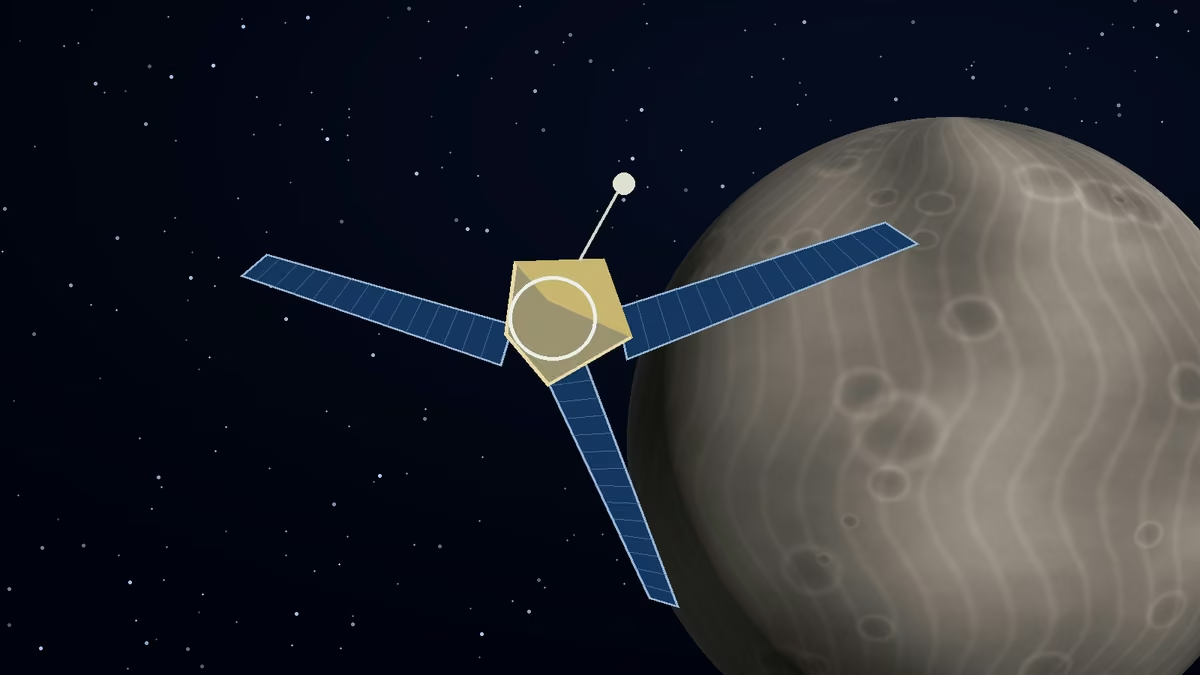
The European Space Agency’s Jupiter Icy Moons Explorer, officially called JUICE, launched on April 14, 2023, aboard an Ariane 5 rocket.
The spacecraft is designed to investigate Jupiter and its large icy moons, with Ganymede as its primary scientific target.
According to ESA’s current mission plan, JUICE is expected to arrive at Jupiter in July 2031 and begin orbiting Ganymede in late 2034.
Its major objectives include investigating Ganymede’s ocean, icy crust, geological history, magnetic field, and potential habitability.
The spacecraft carries instruments designed for imaging, radar sounding, magnetic measurements, spectroscopy, and other scientific observations. [14] [15]
JUICE mission timeline
| Date | Mission milestone |
|---|---|
| April 14, 2023 | Launched from French Guiana |
| August 2024 | Lunar-Earth gravity-assist encounter |
| August 2025 | Venus gravity-assist encounter |
| September 28, 2026 | Successfully completed another Earth flyby |
| January 2029 | Planned final Earth gravity assist |
| July 2031 | Planned arrival at Jupiter |
| Late 2034 | Planned entry into orbit around Ganymede |
| 2035 | Planned Ganymede orbital investigations and nominal mission completion |
As of November 2026, JUICE has successfully completed its September 2026 Earth flyby and remains on its journey toward Jupiter. The mission’s planned dates may change as operations and trajectory requirements evolve. [14] [15] [16]
10. Ganymede’s Name Comes From Ancient Greek Mythology
The names of Jupiter’s major moons reflect a long astronomical tradition connecting celestial objects with classical mythology. Although Galileo originally used different terminology for the moons he discovered, the mythological names proposed during the seventeenth century eventually became standard. Ganymede’s name is especially appropriate because it refers to a figure closely associated with Zeus, the Greek counterpart of Jupiter.
Fact 50. Ganymede Was Named After a Figure in Greek Mythology
Ganymede takes its name from a beautiful young figure in ancient Greek mythology.
According to the traditional myth, Zeus carried Ganymede to Mount Olympus, where he became the cupbearer of the gods.
Because Zeus is the Greek equivalent of the Roman god Jupiter, the name fits the broader tradition of naming Jupiter’s satellites after mythological figures associated with the supreme deity.
Although Galileo discovered the moon, the name Ganymede was proposed by Simon Marius, drawing on a suggestion associated with Johannes Kepler.
The name eventually became widely accepted and remains the moon’s official astronomical designation. [1] [4]
Quick Reference: Essential Facts About Ganymede
The following table summarizes Ganymede’s most important physical and scientific characteristics. Values such as diameter, orbital distance, and orbital period are well measured, while information about its deep ocean and internal structure relies partly on scientific modeling. This distinction is important because observations can establish some properties directly while others require interpretation of indirect evidence.
| Property | Key fact |
|---|---|
| Name | Ganymede |
| Parent planet | Jupiter |
| Classification | Natural satellite |
| Largest moon ranking | 1st in the Solar System |
| Diameter | Approximately 5,262 km |
| Mean radius | Approximately 2,631 km |
| Mass | Approximately 1.482 × 10²³ kg |
| Average orbital distance | Approximately 1,070,400 km from Jupiter’s center |
| Orbital period | Approximately 7.155 Earth days |
| Rotation period | Approximately 7.155 Earth days |
| Tidal locking | Yes |
| Surface gravity | Approximately 1.43 m/s² |
| Average density | Approximately 1.94 g/cm³ |
| Daytime surface temperature | Approximately 90 to 160 K |
| Surface composition | Water ice and non-ice materials |
| Atmosphere | Extremely thin exosphere containing oxygen, water vapor, and trace gases |
| Magnetic field | Internally generated |
| Magnetosphere | Present |
| Subsurface ocean | Strong indirect evidence for salty liquid water |
| Internal structure | Metallic core, rocky mantle, water-rich outer layers |
| Main geological terrain | Dark cratered and bright grooved terrain |
| Discovery | Galileo Galilei, January 7, 1610 |
| Important exploration | Pioneer, Voyager, Galileo, Hubble, Juno |
| Upcoming exploration | ESA JUICE mission |
| Planned Ganymede orbital investigation | Beginning late 2034 |
Values are based primarily on NASA’s Ganymede reference materials, JPL planetary satellite data, and ESA mission documentation. [1] [2] [3] [14]
Frequently Asked Questions About Ganymede
Ganymede raises several questions about planetary classification, physical size, liquid water, habitability, and future exploration. Some answers are firmly established through direct observations, while others depend on models that scientists are still testing. The following explanations address common questions and distinguish Ganymede’s confirmed physical characteristics from the possibilities suggested by its unusual interior and environment.
What are five interesting facts about Ganymede?
Five particularly interesting facts distinguish Ganymede from most other moons. First, it is the largest moon in the Solar System. Second, it is wider than Mercury. Third, it is the only known moon with an internally generated magnetic field. Fourth, it has strong evidence of a vast underground saltwater ocean. Fifth, its surface contains ancient dark regions and extensive bright grooves produced by geological deformation.
Is Ganymede bigger than Earth?
No. Ganymede is considerably smaller than Earth, although it is larger than Earth’s Moon.
Ganymede has a diameter of approximately 5,262 kilometers, while Earth’s diameter is about 12,742 kilometers.
This means Ganymede is roughly 41% as wide as Earth.
Its gravity is also much weaker because it contains far less mass. However, Ganymede’s size is extraordinary for a natural satellite, and it is larger in diameter than Mercury, which is classified as a planet.
Is Ganymede bigger than Mercury?
Yes. Ganymede’s diameter is approximately 5,262 kilometers, compared with Mercury’s 4,879 kilometers.
Therefore, Ganymede is around 383 kilometers wider than Mercury.
However, Mercury is considerably denser and has more than twice Ganymede’s mass.
This difference demonstrates why an object’s physical diameter alone does not determine its mass or astronomical classification.
Mercury is a planet because it directly orbits the Sun and satisfies the relevant planetary classification criteria, while Ganymede is a natural satellite of Jupiter.
Does Ganymede have water?
Yes. Ganymede contains enormous quantities of water ice on its surface and within its outer structure.
There is also strong indirect evidence for a buried ocean containing liquid saltwater.
Some models suggest that this ocean may contain more water than all of Earth’s surface oceans combined.
However, the water beneath Ganymede has not been directly sampled, and scientists do not yet know its exact depth, chemical composition, or arrangement among possible high-pressure ice layers.
Can humans breathe on Ganymede?
No. Humans cannot breathe naturally on Ganymede, despite the presence of oxygen in its extremely thin atmosphere.
Its exosphere has far too little gas to provide the oxygen pressure necessary for human respiration.
A person exposed to its surface without adequate protection would also face near-vacuum conditions, extreme cold, and radiation.
Future human exploration would require sealed, pressurized environments with artificial life-support systems, thermal protection, and appropriate radiation shielding.
Could humans live on Ganymede?
Human habitation on Ganymede would require technology far beyond ordinary survival equipment.
The moon’s surface is extremely cold, has almost no atmospheric pressure, experiences radiation exposure, and possesses much weaker gravity than Earth.
Any human settlement would require dependable power generation, pressurized habitats, radiation shielding, water processing, and life-support infrastructure.
Ganymede’s extensive water ice could theoretically provide a useful resource, but its extraction, purification, and handling would introduce major engineering challenges.
There are currently no approved human settlement missions to Ganymede.
Is there life on Ganymede?
No extraterrestrial life has been discovered on Ganymede.
Scientists are interested in the moon because its probable underground ocean may provide one important ingredient for life: liquid water.
However, liquid water alone is insufficient to establish habitability.
Life as we know it also depends on appropriate chemistry, accessible energy sources, and stable environmental conditions.
Researchers have not established whether Ganymede’s ocean possesses all these requirements, particularly whether sufficient chemical energy can be generated and sustained within its deep interior.
Why does Ganymede have a magnetic field?
Ganymede’s magnetic field is believed to originate from a dynamo operating inside its metallic core.
A dynamo develops when electrically conductive materials move in ways that generate and maintain magnetic fields.
Scientists think that motion within an iron-rich liquid region of Ganymede’s core produces its intrinsic magnetic field.
This explanation is consistent with Galileo’s magnetic observations and models of the moon’s differentiated interior.
However, scientists continue investigating how the core retains sufficient energy and the detailed processes responsible for maintaining the field.
How long is a day on Ganymede?
Ganymede rotates once on its axis in approximately 7.155 Earth days.
Because it is tidally locked to Jupiter, this rotation period matches its orbital period around the giant planet.
Consequently, the same hemisphere continuously faces Jupiter.
A complete cycle of local solar illumination is slightly longer than its rotation period because the Jupiter-Ganymede system also moves around the Sun.
Ganymede may additionally experience eclipses when Jupiter blocks sunlight, so daylight conditions involve more than its rotation alone.
How was Ganymede discovered?
Ganymede was discovered through the telescopic observations of Galileo Galilei beginning on January 7, 1610.
Galileo noticed small points of light near Jupiter and followed their movements over subsequent nights.
He eventually recognized that these objects were satellites orbiting Jupiter rather than fixed background stars.
The discovery challenged the traditional belief that all celestial bodies revolved around Earth.
Simon Marius independently observed Jupiter’s moons around the same era and helped establish their familiar mythological names.
What makes Ganymede different from Europa and Callisto?
Ganymede, Europa, and Callisto are all large icy satellites of Jupiter, but they have important differences.
Europa has a highly fractured icy surface and strong evidence for an underground ocean, making it a major target for habitability research.
Callisto has a heavily cratered surface and comparatively limited evidence of extensive geological resurfacing.
Ganymede is larger than both and possesses an internally generated magnetic field.
Its combination of ancient terrain, bright tectonic grooves, metallic core, and probable deep ocean makes its evolutionary history particularly unusual.
When will scientists explore Ganymede again?
The next major planned exploration of Ganymede will be carried out by ESA’s Jupiter Icy Moons Explorer, or JUICE.
Launched in April 2023, the spacecraft is scheduled to reach Jupiter in July 2031.
It will investigate Ganymede through flybys before entering orbit around the moon in late 2034, according to ESA’s current plan.
The mission will examine Ganymede’s magnetic environment, surface geology, icy shell, internal ocean, and possible habitability.
These investigations could substantially improve understanding of the moon’s interior structure and geological evolution. [14] [15]
Conclusion: Why Ganymede Is One of the Solar System’s Most Extraordinary Worlds
Ganymede is much more than Jupiter’s largest moon. Its extraordinary size, internally generated magnetic field, ancient icy terrain, and probable subsurface ocean make it one of the most scientifically compelling worlds in the Solar System.
The evidence gathered by Voyager, Galileo, Hubble, and Juno has revealed a complicated planetary environment shaped by gravitational interactions, geological deformation, radiation, and internal processes.
Its frozen exterior preserves evidence of ancient events, while magnetic observations suggest that liquid saltwater may remain hidden beneath a thick icy shell.
These discoveries also raise fundamental questions that scientists have not yet answered.
How is Ganymede’s ocean structured? Does liquid water directly contact its rocky mantle? What maintains the moon’s internal magnetic dynamo? Could its deep interior provide the chemical and energetic conditions necessary for life?
ESA’s JUICE mission is expected to help answer many of these questions through detailed observations during the 2030s.
Ultimately, Ganymede demonstrates that a world can be geologically complex and scientifically intriguing even when its surface appears frozen and inactive. Investigating this remarkable moon will improve our understanding of how large satellites form, how underground oceans evolve, and where potentially habitable environments might exist beyond Earth.
Sources
The following references prioritize NASA, NASA’s Jet Propulsion Laboratory, the European Space Agency, the U.S. Geological Survey, and peer-reviewed planetary research. Sources discussing theoretical interior structures are distinguished in the article from those reporting spacecraft measurements.
[1] NASA Science. Ganymede: Facts. General physical properties, discovery, ocean evidence, surface geology, and magnetic field.
[2] NASA Jet Propulsion Laboratory. Planetary Satellite Physical Parameters. Radius, gravitational parameter, and density measurements for natural satellites.
[3] NASA National Space Science Data Center. Jovian Satellite Fact Sheet. Physical parameters and orbital data for Jupiter’s moons.
[4] NASA Science. Ganymede: Exploration. Discovery history and spacecraft exploration from Pioneer to Juno.
[5] NASA Hubble Mission Team. NASA’s Hubble Observations Suggest Underground Ocean on Jupiter’s Largest Moon. March 12, 2015. Evidence from ultraviolet auroral observations.
[6] NASA Jet Propulsion Laboratory. Ganymede May Harbor ‘Club Sandwich’ of Oceans and Ice. May 1, 2014. Theoretical modeling of layered oceans, high-pressure ice, and potential water-rock interaction.
[7] NASA Hubble Mission Team. Hubble Finds First Evidence of Water Vapor at Jupiter’s Moon Ganymede. July 26, 2021. Evidence for water vapor produced by surface sublimation.
[8] NASA Jet Propulsion Laboratory. Salts and Organics Observed on Ganymede’s Surface by NASA’s Juno. October 30, 2023. JIRAM observations of mineral salts and possible organic compounds.
[9] U.S. Geological Survey. Global Geologic Map of Ganymede. February 12, 2014. Scientific mapping of Ganymede’s terrain and geological history.
[10] NASA Jet Propulsion Laboratory. NASA’s Juno Celebrates 10 Years With New Infrared View of Moon Ganymede. August 5, 2021. Infrared evidence concerning polar ice and radiation-driven surface differences.
[11] NASA Jet Propulsion Laboratory. Palimpsest Secondary Craters on Ganymede. November 18, 1997. Galileo observations of subdued ancient impact structures.
[12] NASA Science Photojournal. Ganymede: Ridges, Grooves, Craters and Smooth Areas of Uruk Sulcus Region. Galileo spacecraft imagery and geological interpretation.
[13] NASA Science. A Striking Crater on Jupiter’s Moon Ganymede. February 22, 2022. Juno observations of Kittu crater and its dark ejecta rays.
[14] European Space Agency. Jupiter Icy Moons Explorer: JUICE. Official mission overview, launch information, and flight schedule.
[15] European Space Agency. The Moons of Jupiter: What Will JUICE Discover?. Ganymede scientific objectives and planned orbital investigations.
[16] European Space Agency. Successful Earth Flyby Improves Juice’s Course to Jupiter. September 28, 2026. Current mission progress and trajectory update.
[17] Astronomy & Astrophysics. A Patchy CO₂ Exosphere on Ganymede Revealed by the James Webb Space Telescope. October 17, 2024. Peer-reviewed evidence for carbon dioxide gas around Ganymede.
[18] Astronomy & Astrophysics. Composition and Thermal Properties of Ganymede’s Surface from JWST/NIRSpec and MIRI Observations. Peer-reviewed spectroscopic investigation of Ganymede’s surface ice, carbon dioxide, hydrogen peroxide, and thermal properties.